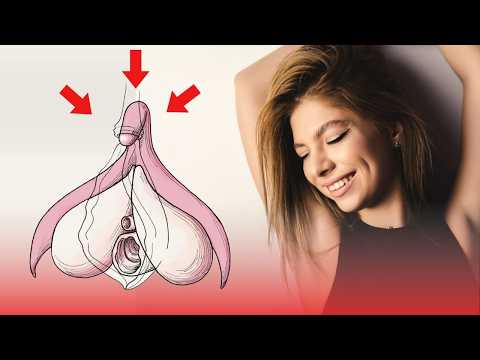
In 2026, researchers finally completed the full nerve mapping of the clitoris, revealing a 30-year delay compared to the penis. This discovery highlights a significant clinical gap in female reproductive health, rooted in historical underfunding and misunderstanding. Understanding the clitoris's complex anatomy and nerve network is crucial for improving surgical outcomes, pain management, and overall women's health advocacy.
There is a persistent stigma around sexually transmitted infections (STIs) and urinary tract infections (UTIs), even among those with perfect hygiene. Particularly, Black women have historically been subjected to unethical medical practices, including being studied and experimented on without consent. Period pain is often normalized, but pain that interferes with daily life is not normal. What if the reason many women have not received answers about their health is not because their bodies are broken, but because the medical system was never built to listen to them?
Welcome to G Chats, hosted by Shiana Jara in the G Spot. This episode focuses on the clitoris, a topic that might seem specific or random but is incredibly important. In 2026, researchers revealed the full nerve mapping of the clitoris, finally fully understanding this organ. This is a huge milestone in female reproductive health.
To put this into perspective, the penis was fully mapped in terms of nerve endings and interaction with the male body in 1998. The clitoris, an anatomically homologous organ to the penis, was only fully mapped in 2026 — a 30-year delay. This delay is not coincidental but reflects research priorities that have historically neglected female anatomy.
Most people have been taught that the clitoris is a small, button-like structure primarily responsible for pleasure. However, this understanding is wildly incomplete. The clitoris is a complex erectile organ similar to the penis, composed of multiple structures including the vestibular bulbs, body, glans, and crura. These structures extend internally along the pubic rami and surround the vaginal canal.
These internal structures sit on either side of the vaginal opening and contribute to engorgement and sensitivity during intercourse and other activities involving the vagina. The clitoris has a three-dimensional network of erectile tissue that plays roles not only in sexual function but also in vascular dynamics and tissue responsiveness.
The clitoris is primarily innervated by the dorsal nerves of the clitoris, which are terminal branches of the pudendal nerve originating from sacral nerve roots S2 to S4. Additionally, cavernous nerves, part of the autonomic nervous system, contribute to vascular regulation and erectile function. These nerves form a highly intricate network with dense sensory innervation at the glans and branching throughout the internal structures.
The 2026 nerve mapping clarified the exact pathways, density, and distribution of these nerves, which had previously only been approximated or partially described.
Understanding the nerve network of the clitoris is crucial for avoiding nerve damage during pelvic surgeries such as endometriosis excision, pelvic reconstructive surgery, labiaplasties, vaginoplasties, and some urological procedures. Without precise anatomical guidance, there is a real risk of injuring these nerves, which can lead to reduced sensation, chronic pain, neuropathic symptoms, or loss of function.
Historically, when patients reported such outcomes, they were often dismissed or told these complications were rare. In reality, the lack of anatomical clarity made it impossible to define what normal preservation of function should look like.
This issue is not isolated to the clitoris. Women have historically been excluded from clinical trials due to the complexity of female hormones. Instead of understanding these complexities, women have been left out, resulting in underrepresentation in research.
Conditions such as endometriosis, vulvodynia, and chronic UTIs are underfunded, underdiagnosed, and misunderstood. Even the vaginal microbiome has only recently begun to be studied in depth.
The fact that full nerve mapping of the clitoris is new in 2026 is consistent with the broader pattern of neglect in women's health research.
The clitoris has one of the highest densities of nerve endings in the human body. Pain experienced during intercourse, post-surgical pain, or unexplained vulvar pain should not be minimized. These symptoms require a neuroanatomical understanding because nerve irritation, compression, or damage can cause burning, tingling, hypersensitivity, or numbness.
Without proper nerve mapping, these symptoms were often labeled vague or idiopathic rather than traced back to specific anatomical causes.
This nerve mapping milestone is both a sign of progress and a reminder of how far women's health research still needs to go. If we are only now fully understanding the clitoris's anatomy, imagine how much more remains to be uncovered about the female body.
Self-education, advocacy, and asking better questions in healthcare settings are essential. The gaps in medicine must be discussed, highlighted, and challenged with urgency and passion.
Improving outcomes in women's health requires acknowledging existing gaps. The 2026 nerve mapping of the clitoris exemplifies both progress and the long-standing neglect of female reproductive health.
The clitoris is not more complex than the penis; the disparity in understanding is due to clinical neglect and skewed research priorities. Recognizing this is the first step toward change.
Advocates and voices in this space are crucial. Without advocacy, the clitoris might not have been fully mapped for another decade. Your voice matters in pushing for better research, understanding, and care.
Thank you for engaging with this important topic. Sharing this knowledge helps empower more people to advocate for themselves and others in the realm of female reproductive health.
Together, we can work toward a future where women's health is prioritized, understood, and respected.