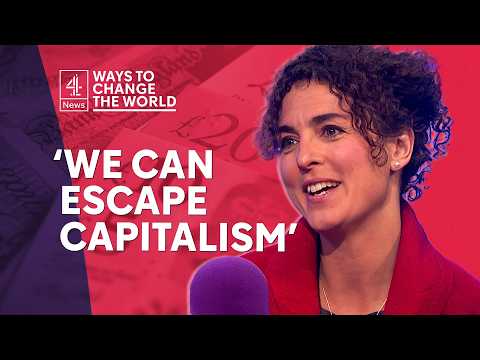
Yanis Varoufakis discusses the limitations of traditional economic models, the importance of pluralism in economic theory, and the ethical dilemmas inherent in interpreting economic data, emphasizing that economics cannot be treated as a pure science due to its reliance on subjective interpretations.
In a thought-provoking discussion, Yanis Varoufakis delves into the intricacies of economic theory, challenging the conventional wisdom that often dominates the field. His insights stem from his background in microeconometrics and his experiences in experimental economics, leading to a broader understanding of the limitations of traditional economic models.
Varoufakis's academic journey began with a PhD in microeconometrics at a time when the field was still emerging. He focused on individual negotiations between employers and trade unions in the United States, which led him to confront prevailing economic theories. One significant debate he encountered was with an MIT professor, Hank Farber, who proposed a model depicting employers as rational optimizers and unions as mechanical resistors.
Farber's model suggested that employers strategically maximize long-term profits while unions merely react to offers without strategic thinking. Varoufakis turned this model on its head, proposing that unions could also be rational actors, maximizing their aggregate wages while employers might resist change mechanically. His findings revealed that both models could fit the data equally well, highlighting a critical point: empirical data alone cannot resolve ideological disputes in economics.
Varoufakis argues for the necessity of pluralism in economic thought. Unlike the natural sciences, where controlled experiments can yield definitive results, economics often lacks such clarity. He reflects on his decade-long experience conducting experiments in laboratories, where results could be replicated but were often dismissed as merely reflective of the specific subjects involved rather than the theories being tested.
One of the key theories in economics, expected utility theory, has been shown to fail in predicting human behavior under risk in numerous experiments. Varoufakis points out that rather than reevaluating the theory, many economists attribute the failures to the irrationality of the subjects. This tendency to blame the subjects rather than the theory itself illustrates a fundamental flaw in the discipline.
Even when economists agree on numerical data, significant disagreements can arise regarding the interpretation of that data. Varoufakis presents a compelling example involving a village in Africa that experiences fluctuating crop yields. During good years, a middleman buys excess produce to sell during bad years, leading to two contrasting interpretations of his actions.
These differing interpretations underscore the ethical and political dimensions of economic analysis. The same numerical data can lead to vastly different conclusions based on underlying values and priorities.
Yanis Varoufakis's exploration of economic theory reveals the complexities and limitations inherent in the discipline. He emphasizes that economics cannot be treated as a pure science due to the subjective nature of interpretation and the ethical dilemmas that arise from differing perspectives. As we navigate the challenges of modern economies, embracing pluralism and recognizing the multifaceted nature of economic interactions will be crucial for developing a more comprehensive understanding of our world.