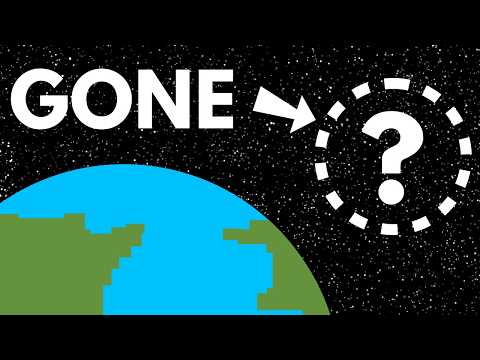
If the moon vanished, Earth would face immediate darkness, altered tides, and severe ecological impacts. Over time, climate instability could lead to mass migrations and resource conflicts, threatening human civilization.
In a thought-provoking scenario, we explore the implications of the moon suddenly disappearing from our night sky. This hypothetical situation raises questions about the immediate and long-term effects on Earth and its inhabitants.
Imagine going to bed under the comforting glow of the moon, only to wake up in a world devoid of its light. The first noticeable change would be the darkness. Without the moon reflecting sunlight, nights would become significantly darker. While urban areas, illuminated by artificial lights, might not feel much different, rural regions would plunge into pitch blackness. This shift would benefit nocturnal creatures like bats and owls, but it poses dangers for humans and other animals, making them vulnerable to predators lurking in the shadows.
After about a week without the moon, the oceans would begin to exhibit drastic changes. The moon's gravitational pull is responsible for creating tides, and without it, tides would shrink to about one-third of their usual size. The sun would still exert some influence, but it would not be enough to maintain the robust tidal patterns we currently experience.
Weaker tides would lead to diminished wave activity, resulting in less nutrient mixing in the oceans. This disruption would have dire consequences for coastal ecosystems, which rely on healthy tidal patterns. Many marine species, such as horseshoe crabs, grunion fish, and corals, depend on these tides for reproduction. The absence of these signals could threaten their survival, potentially leading to extinction for some species.
With nearly three-quarters of the global population living within 31 miles of the ocean, the collapse of marine food chains could devastate coastal fisheries, cutting off vital sources of food and income for billions of people. The moon's role in our ecosystem is crucial, and its absence would be felt worldwide.
As time progresses, the absence of the moon would lead to even more significant challenges for humanity. After a year, the effects would become increasingly apparent. The moon plays a critical role in stabilizing Earth's axial tilt, which is currently at about 23.5 degrees. Without the moon's gravitational influence, Earth's axis could begin to wobble, potentially shifting by 20 to 60 degrees.
This wobbling could result in extreme climate variations, with some regions experiencing prolonged exposure to the sun, leading to desert-like conditions, while others could be shrouded in darkness and cold. Such drastic changes would force mass migrations as people seek more hospitable environments, leading to conflicts over scarce resources. The stability of civilizations would be put to the test in this new, unpredictable world.
If humanity were to survive thousands of years in a moonless world, the ongoing climate instability could completely reshape life on Earth. The biosphere, as we know it, might collapse entirely, leading to a loss of biodiversity and the potential extinction of numerous species, including humans. The moon's absence would not only alter our nights but could also spell disaster for life on Earth.
In conclusion, the moon is far more than just a beautiful celestial body in our night sky. Its gravitational pull influences tides, stabilizes our planet's tilt, and supports countless ecosystems. The hypothetical disappearance of the moon would lead to immediate darkness, ecological collapse, and long-term climate instability, threatening the very fabric of human civilization. As we ponder this scenario, it becomes clear that we should appreciate and protect our moon, for its presence is vital to our existence on Earth.