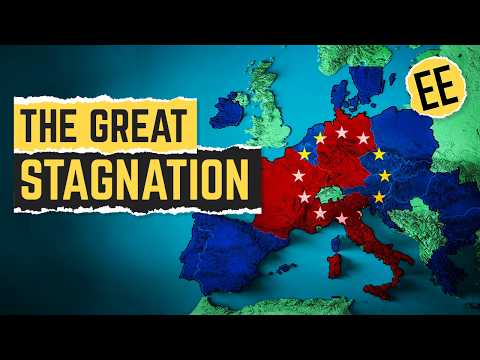
Europe's major economies—Germany, Italy, and France—are grappling with stagnation, aging populations, and declining competitiveness. This blog explores the unique challenges each country faces and the implications for the continent's economic future.
For centuries, Europe was seen as a pillar of stability in the global economy, home to some of the richest and most advanced nations in the world. Germany's industrial strength, France's social model, and Italy's cultural and economic legacy have shaped not just the continent, but global economic policy. However, this stability is starting to crack, revealing deeper issues that have been decades in the making.
Growth has stalled across Europe, populations are aging, productivity is lagging, and investment is drying up. Once considered models to follow, these stagnating powers are becoming cautionary tales. Germany is rethinking its industrial strategy, Italy is grappling with long-term structural stagnation, and France is struggling to balance social protections with economic competitiveness. Together, these stories reveal a continent facing significant challenges.
Germany is renowned for its engineering prowess and has recently become the third-largest economy in the world, following China and the USA. It is the most powerful economy within the European Union, largely due to its ability to produce high-end manufactured goods. However, a long list of internal and external challenges is putting significant pressure on German industry.
Despite these challenges, some economists argue that a shift away from traditional manufacturing could be beneficial for Germany. By leveraging its strong reputation for quality, Germany could focus on high-value goods without the burden of domestic production.
Italy's economy reflects deeper challenges that have persisted for decades. With high national debt, an aging population, and a shrinking workforce, Italy is facing a unique set of economic issues.
Italy's historical reliance on artisanal craftsmanship has created a strong reputation for quality, but this has not translated into sustainable economic growth. The country must address its structural issues to regain its economic footing.
France's economic model, built on strong worker protections and public services, is under pressure from global economic forces. The country is at a crossroads, needing to reshape its economy while maintaining its unique social fabric.
France's historical emphasis on quality over quantity has created a unique economic identity, but it must adapt to remain competitive in an increasingly globalized economy.
Germany, Italy, and France together make up more than half of the entire EU economy. Their struggles are not just national; they are systemic. Aging workforces, slowing productivity, and political gridlock are common challenges that threaten the economic stability of the continent. As these advanced economies confront new realities, the question remains: who will adapt, and who will stagnate? The future of Europe's great powers hangs in the balance as they navigate these complex economic landscapes.