This blog post explores the extensive history of Earth and life, detailing the formation of the planet, the emergence of life, and the evolutionary milestones that have shaped the biosphere over 4.5 billion years, culminating in the rise of human civilization and the potential future of life on Earth.
More than 4.5 billion years ago, the Milky Way galaxy collided with a nearby dwarf galaxy, accelerating the formation of stars and ultimately leading to the creation of our solar system. This blog post delves into the intricate history of Earth and life, tracing the evolution of our planet and its inhabitants through significant geological and biological milestones.
The solar system formed from material circulation within the Milky Way, where particles were zonally distributed based on their water content. As collisions occurred, small particles grew into planetesimals, which eventually coalesced to form planets, including Earth.
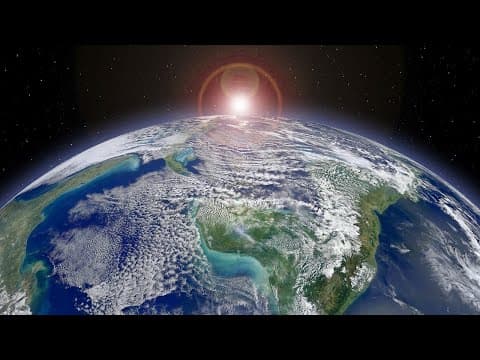
The early Earth was a dry, inhospitable place, lacking an atmosphere and oceans. Over 200 million years, planetesimals bombarded the Earth, contributing to the formation of a toxic ocean and atmosphere composed of carbon, hydrogen, oxygen, and nitrogen. The surface was covered in magma, and as it cooled, a basaltic oceanic crust formed.
Around 4.2 billion years ago, the Earth's liquid core formed, generating a magnetic field that shielded the surface from solar winds and cosmic rays. This created conditions conducive to life. Primitive life began to emerge in underground geysers, where radiation from uranium ore facilitated the formation of biomolecules.
Through wet and dry cycles, fatty acids formed around proto-life molecules, leading to the development of ribozymes capable of self-replication. This marked the beginning of cellular life. As plate tectonics evolved, the primordial continent was destroyed, but life persisted on the margins of fragmented landmasses.
The first prokaryotic organisms emerged, utilizing sunlight for energy and evolving protective mechanisms against the toxic ocean. Cyanobacteria appeared, producing oxygen and altering the Earth's atmosphere, which led to the formation of banded iron formations.
The Cambrian explosion, approximately 541 million years ago, marked a significant diversification of life, with the emergence of 35 new phyla. This event was driven by environmental changes and the assembly of continents, which facilitated genetic mutations and the evolution of new species.
During the Mesozoic era, dinosaurs dominated the Earth, thriving in diverse ecosystems. The breakup of the supercontinent Pangea allowed for the hybridization of species and the emergence of new forms of life.
Throughout Earth's history, cosmic events such as supernova explosions and asteroid impacts have triggered mass extinctions, creating opportunities for new species to evolve. The most notable extinction event occurred 66 million years ago, leading to the demise of the dinosaurs and paving the way for mammals to flourish.
As mammals evolved, they adapted to various environments, eventually leading to the emergence of primates. The development of human ancestors marked a significant turning point in Earth's history, characterized by the evolution of larger brains and advanced cognitive abilities.
Human beings began to spread across the globe, developing agriculture and forming complex societies. The rise of civilizations was marked by advancements in technology, trade, and governance, culminating in the Industrial Revolution and the information age.
As humanity faces challenges such as climate change and resource depletion, the future remains uncertain. Innovations in technology may lead to new forms of life and exploration beyond Earth, while the potential for self-replicating robots and artificial intelligence raises questions about the role of humans in the universe.
The history of Earth and life is a testament to resilience and adaptation in the face of cosmic and environmental changes. From the formation of the planet to the rise of human civilization, the journey has been marked by significant milestones that continue to shape our understanding of life and its future on Earth. As we look ahead, the interplay between life and the universe will undoubtedly influence the next chapters of this epic saga.