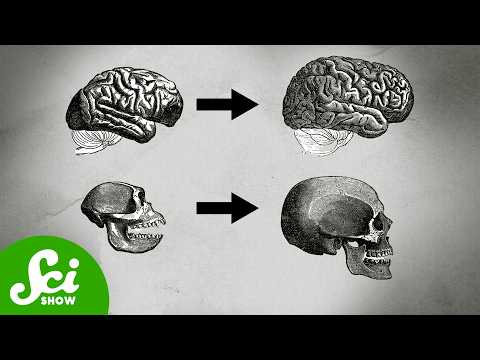
Recent research suggests that autism is deeply intertwined with the evolution of the human brain. Changes in gene expression in specific brain layers linked to autism coincided with the development of advanced cognitive abilities unique to humans. This neurodiversity may have provided evolutionary advantages by fostering a variety of cognitive strengths within communities, contributing to human survival and social complexity.
Human brains are remarkable, capable of inventing everything from the wheel to entire cities like New York. At some point in our evolution, our brains developed sophisticated cognition that set us apart from other species. However, not all brains are alike. Some people have brains that are built a bit differently, such as those with autism. Intriguingly, these two facts—the evolution of advanced cognition and the existence of autism—may be connected.
There is evidence suggesting that autism is not merely a recent or purely environmental phenomenon. Instead, it might be so hardcoded into our brains that it played a role in making us smart in the first place. This raises fascinating questions about what autism has to do with the very existence of the human brain.
Autism, along with some other neuropsychiatric disorders like schizophrenia, appears to occur only in humans. While animal models, such as mice, are used in research to study social deficits similar to those seen in autism, these models do not fully capture the complexity of human autism. Mice are highly social, but their social patterns are far less complex and abstract than those of humans. Non-human primates show behaviors somewhat akin to human autism but still do not exhibit it in the same way. Thus, autism as we define it seems to be uniquely human.
A pivotal study published in 2025 in the journal Molecular Biology and Evolution provides compelling evidence linking autism to the evolution of the human brain. The study focuses on changes that occurred in the brain after our last common ancestor with our closest primate relatives, changes that contributed to humanity's cognitive edge.
The researchers explored a decades-old hypothesis that variations in gene expression drove the evolution of the human brain. Although every cell in the body contains the same genome, different cells express different genes depending on their function. This selective gene expression allows cells to perform specialized tasks.
The brain is composed of various tissues and cell types, each with distinct gene expression profiles. The study honed in on the cerebral neocortex—the outermost folded portion of the mammalian brain responsible for higher cognitive functions. This neocortex has six layers, and the second and third layers from the outside, known as L23IT neurons, have undergone significant changes in humans compared to other mammals.
Using single cell RNA sequencing, a technique that isolates individual cells to analyze their gene expression, the researchers compared human L23IT neurons to those of other primates. They found that these layers evolved rapidly in humans, while remaining relatively unchanged in other primates.
Simultaneously, there was a dramatic change in the expression of several genes previously linked to autism. This suggests that as these brain layers evolved to support advanced cognition, genetic variations associated with autistic traits also emerged within our species.
While it remains unclear whether these gene expression changes directly caused advanced cognitive abilities, the study proposes intriguing possibilities about the evolutionary benefits of neurodiversity.
Communities may benefit from a diversity of neurotypes. For example, some individuals excel in social situations and leadership, while others have heightened abilities to detect complex patterns or focus intensely on details. This diversity could have allowed groups to assign roles suited to individual strengths, such as negotiating with outsiders, monitoring predators, or tracking environmental changes.
This model suggests that human cognition operates like an infinitely complex switchboard, with different configurations of social and non-social cognitive switches across individuals. These variations manifest as neurodiversity, including the autism spectrum, which represents a kaleidoscope of human neurology.
Neurodivergence may have been an evolutionary trade-off that enhanced group survival. By maintaining a range of cognitive styles, human populations could adapt more effectively to diverse challenges. This diversity likely contributed to the development of our unique cognitive abilities.
It is important to acknowledge that autistic individuals are inherently valuable and deserving of dignity, regardless of any cognitive traits. While this research highlights a potential evolutionary link between autism and human brain development, it does not diminish the challenges faced by autistic people in modern society.
The study establishes a correlation between the emergence of autism and the evolution of the human brain, but further research is needed to explore causal relationships and additional factors involved.
In summary, there is a strong possibility that autism is fundamentally linked to humanity itself. The genetic and cellular changes associated with autism may have played a crucial role in the evolution of the advanced cognitive abilities that define us as a species. This perspective offers a profound insight into how the human brain may be understanding itself through the lens of neurodiversity and evolution.