The Federal Reserve may consider implementing gold quantitative easing (QE) due to a significant discrepancy in gold valuation on the government's balance sheet. This could lead to a massive influx of cash into the economy, impacting inflation and gold prices. While gold has surged in value, the retail market remains cautious. Understanding the dynamics of gold QE is crucial for investors as it could reshape economic landscapes.
In recent discussions surrounding monetary policy, the concept of quantitative easing (QE) has taken an intriguing turn with the Federal Reserve potentially considering gold QE. This article explores what gold QE entails, its implications for the economy, and how it could affect gold prices.
Gold QE refers to the Federal Reserve's potential strategy of revaluing the gold it holds on the government's balance sheet. Traditionally, the Fed has engaged in QE by purchasing government securities to inject liquidity into the economy. However, with gold prices soaring, the idea of leveraging gold assets for monetary policy has emerged.
As of now, the U.S. Treasury holds approximately 8,100 tons of gold, valued at a mere $11 billion on its balance sheet. However, at current market prices, this gold could be worth around $990 billion, creating a staggering discrepancy. This situation presents a unique opportunity for the government to monetize this asset, potentially leading to significant economic implications.
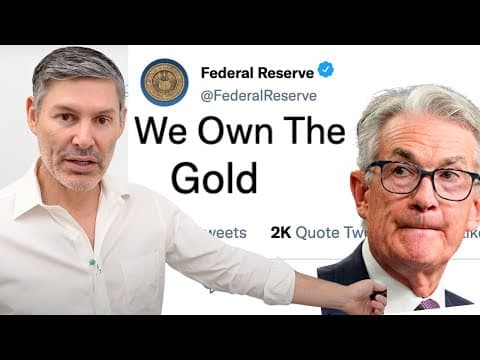
According to a recent article from Zero Hedge, the U.S. Treasury's gold reserves have surpassed $1 trillion in value due to the recent surge in gold prices. Unlike many countries, the U.S. government directly holds gold, while the Federal Reserve holds gold certificates that correspond to these reserves. If the Treasury were to update the value of its gold reserves, it could effectively unlock nearly $1 trillion for government spending.
Countries like Germany, Italy, and South Africa have previously revalued their gold reserves, demonstrating that this is not merely a theoretical concept but a viable strategy employed by various nations. The revaluation would not only increase the Treasury's balance sheet but also allow for increased government spending, potentially leading to inflationary pressures.
One of the primary concerns surrounding gold QE is its potential impact on inflation. If the government injects nearly $1 trillion into the economy without corresponding revenue, it could lead to increased inflation. However, the actual effects would depend on how the government chooses to spend this newfound wealth. For instance, if the funds are allocated to universal basic income (UBI) or direct payments to citizens, it could significantly increase the money supply and drive inflation higher.
While gold is often viewed as an inflation hedge, its price dynamics are complex. The current surge in gold prices can be attributed to various factors, including central bank purchases and increased interest in gold ETFs. However, retail investors remain cautious, with many still selling gold rather than buying. This lack of retail participation could temper the immediate impact of gold QE on prices.
An important aspect of this discussion is the role of commercial banks in the broader context of QE. When banks purchase assets from non-bank entities, such as individuals or the Treasury, it effectively functions as a form of quantitative easing. This means that the actions of commercial banks can have significant implications for the money supply and inflation, often overshadowing the direct actions of the Federal Reserve.
For investors, understanding the dynamics of both the Federal Reserve and commercial banks is crucial. While the Fed's actions are important, the behavior of banks in the market can have a more immediate impact on the economy. As such, investors should closely monitor both entities to gauge potential shifts in monetary policy and their effects on asset prices, particularly gold.
The potential for the Federal Reserve to implement gold QE presents a fascinating intersection of monetary policy and asset valuation. With significant discrepancies in gold valuation on the government's balance sheet, the implications for inflation and gold prices could be profound. As the economic landscape evolves, investors must remain vigilant and informed about these developments to navigate the complexities of the market effectively.