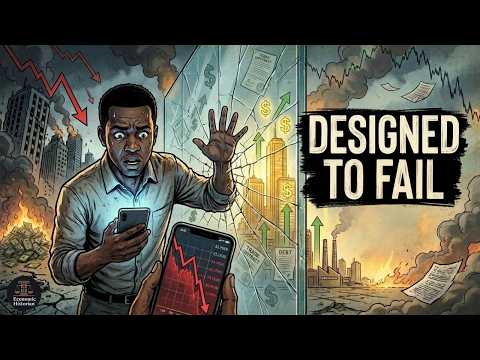
This blog post explores the intricate relationship between fiat currency, government debt, and the potential collapse of the global economy, likening it to a Ponzi scheme. It discusses the historical context of the U.S. dollar's transition from a gold standard to a fiat currency, the implications of this shift, and the resulting economic challenges faced by individuals and nations alike.
The strength of a nation's currency is intrinsically linked to the strength of its economy. The American economy, once considered the strongest in the world, has undergone significant changes since the abandonment of the gold standard in 1971. This blog post delves into the historical context of this shift, the implications of fiat currency, and the potential consequences for the global economy.
On August 15, 1971, President Nixon announced the suspension of the dollar's convertibility into gold, marking a pivotal moment in economic history. This decision was made in response to increasing budget deficits and a growing demand for gold from foreign nations, which raised concerns about the U.S.'s ability to back its currency with gold reserves.
The Bretton Woods Conference in 1944 established the U.S. dollar as the world's reserve currency, tied to gold at a fixed rate. However, as the U.S. began running budget deficits due to programs like the Great Society and the Vietnam War, confidence in the dollar waned. Countries started exchanging their dollars for gold, leading to the eventual suspension of the gold standard.
With the removal of the gold backing, the U.S. Treasury gained the ability to borrow and spend without the constraints of gold reserves. This led to a system where currencies are backed by nothing but government promises, known as fiat currency. The implications of this shift have been profound, resulting in perpetual deficits and a reliance on borrowing to sustain government spending.
The current monetary system has been likened to a Ponzi scheme, where new investors (or loans) are needed to pay off previous investors (or debts). The Federal Reserve creates money out of nothing, which is then loaned to the government, creating a cycle of debt that can never be fully repaid. This system relies on continuous borrowing, leading to an unsustainable economic model.
As more currency is printed, the value of existing currency is diluted, leading to inflation. The purchasing power of the average person has been declining, with many struggling to keep up with rising costs. The average American today faces a standard of living that is worse than that of previous generations, as inflation outpaces wage growth.
Since 1971, the U.S. has run trade deficits, importing more than it exports. Countries that sell goods to the U.S. receive dollars, which they often reinvest by purchasing U.S. government bonds. This creates a cycle where the U.S. borrows from the world to pay for its consumption, further entrenching the Ponzi scheme dynamic.
The reckless money printing by the Federal Reserve poses a significant risk of hyperinflation, where the value of the dollar could plummet rapidly. A loss of confidence in the dollar could trigger a global crisis, as many countries hold their reserves in U.S. dollars. The potential for a currency crisis looms large, with the possibility of a sudden collapse of the dollar's value.
To restore confidence in the monetary system, a return to a sound currency, potentially backed by gold or other tangible assets, is suggested. This would limit government spending and borrowing, forcing accountability and fiscal responsibility.
While systemic change may be slow, individuals can take steps to protect themselves by becoming financially educated. Understanding the implications of fiat currency and the importance of sound money can empower individuals to make informed decisions about their financial futures.
The current global economic system, characterized by fiat currency and unsustainable debt, resembles a pyramid scheme that is on the brink of collapse. As individuals and nations grapple with the consequences of this system, the need for a return to sound monetary practices becomes increasingly urgent. The time to act is now, as the world faces the potential for significant economic upheaval.