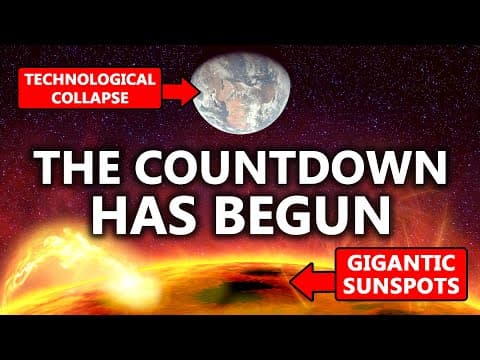
Recent solar activity, including four significant coronal mass ejections, has raised concerns about potential geomagnetic storms and their effects on Earth. This post explores the implications of these solar events, their historical context, and the interconnectedness of solar activity with geological phenomena such as earthquakes and hurricanes.
Welcome to the discussion on the recent solar activity that has captured the attention of scientists and enthusiasts alike. I am Stefon Burns, a geohysicist and space weather enthusiast, here to delve into the energetic happenings in our solar system and their implications for Earth.
In the past week, we have witnessed four significant coronal mass ejections (CMEs) erupting from the far side of the sun. To put this into perspective, if these CMEs had been directed towards Earth, we would have experienced a prolonged geomagnetic storm, potentially reaching severe levels (G4 or G5). Fortunately, these explosions occurred on the sun's far side, sparing us from immediate impacts.
Coinciding with this solar activity, we recorded a magnitude 6 earthquake, the first of its kind in over a week. This raises questions about the relationship between solar events and seismic activity, a topic we will explore further.
CMEs are massive bursts of solar wind and magnetic fields rising above the solar corona or being released into space. These events can significantly affect Earth's magnetosphere, leading to geomagnetic storms that can disrupt technology and power grids.
Historically, the most notable solar storm was the Carrington Event of 1859, which caused widespread telegraph outages and even fires. If a similar event were to occur today, the consequences could be catastrophic given our reliance on technology.
The sun undergoes cycles of activity, and we are currently in a solar maximum phase, which is characterized by increased sunspot activity and solar flares. The recent CMEs are linked to these sunspots, which are regions of intense magnetic activity.
Our ability to forecast solar activity has improved, allowing us to predict these events months in advance. This is not commonly done by mainstream organizations like NASA or NOAA, which typically provide shorter-term forecasts.
When CMEs interact with Earth's magnetic field, they can induce geomagnetic storms. These storms can lead to power outages, disruptions in satellite communications, and even affect human health.
There is a growing body of evidence suggesting a correlation between solar activity and earthquake occurrences. For instance, the alignment of celestial bodies, such as comets and planets, can enhance solar activity, which may in turn trigger seismic events.
As we discuss solar activity, we must also consider the impact of weather phenomena. Hurricane Melissa is currently forming in the Caribbean, with predictions of catastrophic rainfall and potential landfall in Jamaica. The interplay between solar activity and weather patterns is an area of ongoing research.
Looking ahead, we anticipate more solar activity as the sun continues to rotate and sunspots become Earth-facing. The next significant date to watch is October 29th, coinciding with the perihelion of the interstellar object 3I Atlas, which may amplify solar effects.
If the current trend of solar activity continues, we could see increased geomagnetic storms and possibly significant technological disruptions. The interconnectedness of solar activity with geological and meteorological events suggests that we must remain vigilant.
In conclusion, the recent solar explosions and their potential impacts on Earth highlight the importance of understanding our solar system's dynamics. As we continue to monitor these events, it is crucial to stay informed and prepared for any potential disruptions. The interplay between solar activity, earthquakes, and weather phenomena is a reminder of the complex systems at work in our universe.
Thank you for joining me in this exploration of solar activity and its implications. Stay tuned for further updates as we navigate these energetic times together.