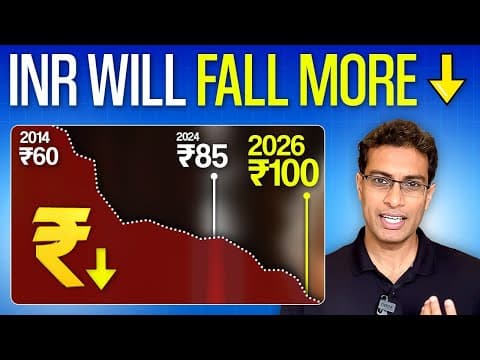
The depreciation of the Indian Rupee (INR) against the US Dollar has significant implications for individuals, including increased costs for studying abroad, higher import bills, and diminished savings. This article explores ten critical impacts of a falling INR and offers strategies to mitigate its effects.
The Indian Rupee (INR) has been falling in comparison to the US Dollar, and this trend is set to have massive implications for individuals across various sectors. Whether you are planning to study abroad, saving money in INR, or going on vacation outside India, the depreciation of the INR affects you more than you might think. In this article, we will explore ten critical impacts of a falling INR and provide insights on how to navigate these challenges.
To grasp the implications of a falling INR, it is essential to understand the basic economic principle of supply and demand. The price of any commodity, including currencies, is determined by the intersection of the supply curve (upward sloping) and the demand curve (downward sloping). When the supply of a currency increases without a proportional increase in demand, its value decreases.
For instance, in 2021, the US government printed approximately 20% of its money supply, significantly increasing the supply of USD. In contrast, the Indian government did not increase its money supply at the same rate, leading to a depreciation of the INR against the USD.
One of the most immediate impacts of a falling INR is the increased cost of education abroad. For example, if the cost of studying at a prestigious institution was 1 crore INR a decade ago, it could now cost approximately 1.4 crores due to currency depreciation. This increase in costs can deter many students from pursuing education overseas.
A depreciating currency can drive foreign wealth away. Investors like Jeff Bezos may hesitate to invest in India if they perceive a risk of asset devaluation. If the INR continues to fall, foreign investors may withdraw their investments, leading to a mass exodus of foreign capital from the Indian market.
India is a net importer of goods, and a falling INR means that the cost of imports rises. For instance, if the INR depreciates, the cost of importing oil or other essential goods increases, leading to higher bills for consumers and businesses alike. This can strain the economy and lead to inflation.
The depreciation of the INR also raises production costs for Indian manufacturers. Many industries rely on imported components, and as the INR falls, the cost of these imports rises. This can lead to higher prices for consumers and reduced profit margins for businesses.
Despite the rising cost of living due to currency depreciation, wages in India have not increased proportionately. Many workers find their salaries stagnant, which exacerbates the financial strain on households. The supply of labor remains high, limiting wage growth.
As the INR depreciates, the value of savings held in INR diminishes. For example, if you have saved 50 lakh INR, its purchasing power decreases over time due to inflation and currency depreciation. This erosion of wealth can be alarming for individuals relying on their savings for future expenses.
Theoretically, a falling INR should make Indian exports cheaper and boost demand. However, this has not been the case in practice. Despite the depreciation, Indian exports have not increased significantly, as quality and competitiveness also play crucial roles in international trade.
The government also feels the impact of a depreciating currency. As the INR falls, the government's purchasing power diminishes, leading to potential increases in taxes to compensate for the loss. This can result in hidden taxes that affect citizens directly.
The depreciation of the INR has led to inflation in hard assets like real estate. For NRIs, properties in India may become cheaper due to the strengthening of their currencies against the INR. This creates competition for local buyers, making it harder for them to acquire property.
To counter the effects of a falling INR, individuals can consider several strategies:
In conclusion, the depreciation of the INR has far-reaching consequences that affect various aspects of life in India. By understanding these impacts and taking proactive measures, individuals can better navigate the challenges posed by a falling currency.