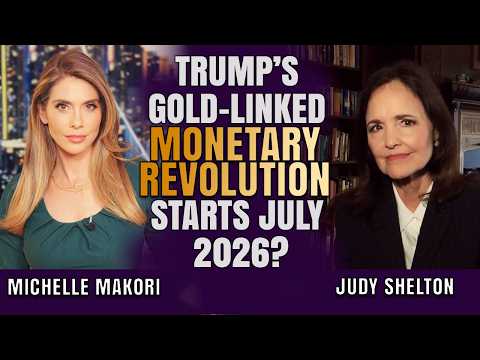
As the U.S. faces unprecedented debt and inflation, discussions around a potential monetary reset are intensifying. Experts suggest that a gold-backed Treasury Trust Bond could restore confidence in the dollar and redefine its role in the global economy by July 4, 2026. This blog explores the implications of such a move, the current economic landscape, and the historical context of gold in monetary systems.
In recent discussions surrounding the U.S. economy, the concept of a monetary reset has gained traction. With the U.S. national debt surpassing $37 trillion and inflation concerns mounting, experts are exploring innovative solutions to restore confidence in the dollar. One such proposal is the introduction of a gold-backed Treasury Trust Bond, which could redefine the dollar's role in the global economy by July 4, 2026.
The U.S. is currently grappling with over $2 trillion in annual deficits and more than $1 trillion in interest payments each year. This situation has led to a debt spiral, where the government is forced to print more money to service its existing debt. As a result, the purchasing power of the dollar is diminishing, leading to a loss of confidence in fiat currencies.
JP Morgan has labeled the current economic climate as the "debasement trade," indicating that investors are increasingly moving towards assets like gold and Bitcoin as a hedge against currency devaluation. This shift reflects a broader trend of "dollarization," where countries are opting to settle trade in their own currencies rather than relying on the U.S. dollar.
Gold has historically served as a reliable measure of value and a stabilizing force in monetary systems. The classical gold standard, which lasted from 1880 to 1913, facilitated significant economic growth and international trade. However, the abandonment of the gold standard in 1971 marked a shift towards fiat currencies, leading to the current challenges faced by the U.S. dollar.
Dr. Judy Shelton, a former Federal Reserve nominee, argues that reintroducing gold into the monetary system could restore fiscal discipline and transparency. The proposed Treasury Trust Bond would allow investors to choose between receiving the bond's face value in dollars or a specified amount of gold at maturity. This option could attract investors seeking a more stable and reliable investment.
Issuing a gold-backed Treasury Trust Bond could signal a commitment to sound money principles and fiscal responsibility. It would also provide a mechanism for the U.S. to leverage its substantial gold reserves, which are currently undervalued on the Treasury's balance sheet.
If the U.S. were to successfully implement this gold-backed bond, it could challenge other nations, particularly those in the BRICS alliance, to follow suit. This move could lead to a more coordinated international monetary system, reducing the competitive devaluation of currencies and fostering fair trade practices.
For the Treasury Trust Bond to become a reality, it would require significant public and legislative support. The Gold Reserve Transparency Act, currently gaining traction in Congress, aims to ensure that the U.S. gold reserves are audited and verified. A publicized audit of Fort Knox could further bolster confidence in the U.S. gold holdings.
President Trump, known for his unconventional approach to economic policy, could play a pivotal role in advancing this initiative. His administration's willingness to challenge the status quo may provide the necessary momentum to implement a gold-backed bond.
As the U.S. navigates a complex economic landscape marked by rising debt and inflation, the idea of a monetary reset through a gold-backed Treasury Trust Bond presents a compelling solution. By restoring gold's role in the monetary system, the U.S. could not only stabilize the dollar but also reassert its position as a leader in the global economy. The coming years will be crucial in determining whether this vision can be realized by the 250th anniversary of the Declaration of Independence on July 4, 2026.