The Komodo dragon, the world's largest living lizard, is a fascinating yet terrifying creature. With unique adaptations like iron-coated teeth and venomous saliva, it is a super predator. Despite its fearsome reputation, the Komodo dragon faces threats from habitat loss and human activity, making conservation efforts crucial for its survival.
The Komodo dragon, a creature that rivals a Saint Bernard not just in size but also in its ferocity, is the world's largest living lizard. While the Saint Bernard is known for its gentle nature, the Komodo dragon is a formidable predator, capable of inflicting serious harm. In this post, we will explore the unique characteristics, hunting strategies, and conservation status of the Komodo dragon, shedding light on why this species is both fascinating and endangered.
Komodo dragons belong to the genus Varanus, which includes over 80 species of monitor lizards. These lizards share common traits such as being carnivorous, possessing long necks, powerful tails, and well-developed limbs. Among them, the Komodo dragon stands out as the largest, with some individuals weighing over 166 kilograms, surpassing even the largest recorded dogs.
To put the size of a Komodo dragon into perspective, consider the green iguana, which can reach lengths of 1.5 meters and weigh around 8 kilograms. A Komodo dragon can easily double that length and weigh approximately 160 kilograms more. This immense size contributes to its reputation as a terrifying predator.
The Komodo dragon's teeth are a key feature that makes it a lethal predator. Although it does not have the strongest bite force compared to other reptiles, its long, curved, and serrated teeth are designed to pierce flesh effectively. Recent studies have revealed that these teeth are coated with iron, which helps maintain their sharpness. The serrations appear visibly orange due to the high concentration of iron, making them resemble blades.
Dr. Aaron LeBlanc, a researcher who studied Komodo dragon teeth, noted that the enamel on their teeth is much thinner than that of humans, yet they perform remarkably well in cutting through meat. Once they bite their prey, Komodo dragons use their powerful neck muscles to thrash back and forth, tearing chunks of flesh.
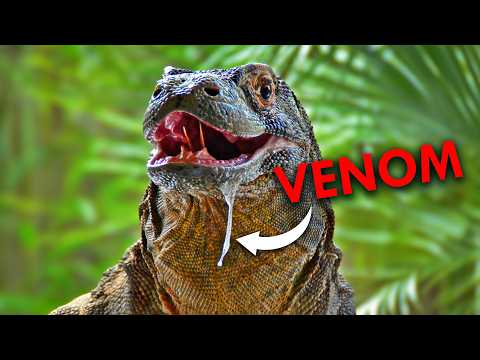
For years, it was believed that Komodo dragons relied on bacteria in their mouths to infect their prey. However, recent discoveries have debunked this myth. Instead, Komodo dragons possess venom glands that produce anticoagulants, allowing their prey to bleed out after being bitten. Professor Brian Fry, a toxicologist, explained that the venom enhances the effectiveness of their bite, increasing their predatory success rate to an astonishing 90-95%.
Komodo dragons have an exceptional sense of smell, capable of detecting rotting flesh from up to 4 kilometers away. Their forked tongues help them determine the direction of scents, allowing them to track down prey effectively. This keen sense of smell is crucial for their survival, especially in their natural habitat.
The name "Komodo dragon" was first used in 1927, when European scientists encountered these lizards in Indonesia. Initially called Varanus komodoensis, the name was later changed to reflect their dragon-like qualities. Despite their fearsome reputation, Komodo dragons are endangered, with only about 2,500 individuals remaining in the wild.
Komodo dragons are native to a few islands in Indonesia, primarily within Komodo National Park. They prefer to stay within familiar territories and do not roam far from their nesting sites. While they can swim, they rarely venture to other islands, contributing to their limited population.
Female Komodo dragons reach sexual maturity at around six years old and typically lay one clutch of eggs per year. Interestingly, females can reproduce through parthenogenesis, allowing them to produce male offspring without mating. After laying eggs, females guard their nests for several months until the eggs hatch.
Komodo dragons are known for their cannibalistic tendencies, often consuming smaller dragons. However, they also exhibit social behavior, sometimes sharing meals with one another. Their strong throat muscles enable them to swallow large chunks of food, allowing them to consume up to 80% of their body weight in a single meal.
Despite their status as apex predators, Komodo dragons face significant threats from habitat loss and human encroachment. Conservation efforts are underway to protect these remarkable creatures and their habitats. Organizations such as the Taronga Conservation Society Australia and the Komodo Survival Program are working to ensure the survival of the Komodo dragon for future generations.
The Komodo dragon is a fascinating yet fearsome creature that embodies the raw power of nature. With its unique adaptations and hunting strategies, it has earned its place as one of the most successful predators on Earth. However, as we learn more about this incredible lizard, it becomes clear that we must also focus on its conservation to prevent its extinction. While they may not be dragons in the mythical sense, the name certainly captures the awe they inspire in those who encounter them.