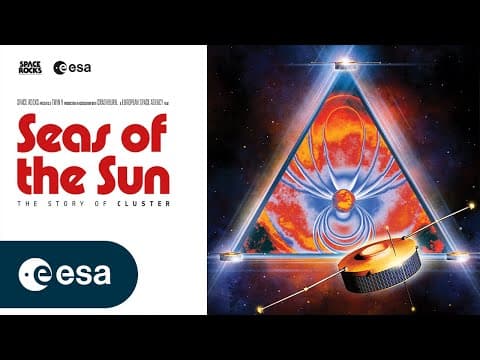
The Cluster mission, a groundbreaking heliophysics project, has provided invaluable insights into space plasma and the Sun's effects on Earth over 24 years. This blog post explores the mission's history, scientific achievements, and emotional farewell as one of its satellites prepares for re-entry.
The Cluster mission, a pioneering heliophysics project, has been a cornerstone of space science for nearly a quarter of a century. Launched in 2000, this mission comprised four identical satellites—Rumba, Samba, Salsa, and Tango—designed to study the Sun and its effects on the solar system, particularly the Earth. As we reflect on the mission's remarkable journey, we explore its scientific contributions, the emotional connections formed by the teams involved, and the bittersweet farewell as one of the satellites prepares for re-entry.
Originally intended to last just two years, the Cluster mission has exceeded all expectations, operating for 24 years. This longevity is a testament to the robust design and engineering of the satellites, which have provided invaluable data on space plasma and its interactions with the Earth's magnetosphere. The mission's success has fostered a deep personal connection between the scientists and the spacecraft, likening them to family members.
Heliophysics is the study of the Sun and its influence throughout the solar system. The Cluster mission has focused on space plasma, a state of matter created when gas is heated to extreme temperatures. By flying in formation, the four satellites have offered a three-dimensional view of the Earth's space environment, allowing scientists to observe phenomena that were previously impossible to measure.
Before Cluster, space missions typically involved one or two spacecraft, limiting the ability to gather comprehensive data. The unique configuration of four satellites allowed for a more detailed understanding of the complex structures and behaviors of space plasma. This approach has been likened to having multiple weather buoys in an ocean, providing a clearer picture of conditions across vast distances.
The data collected by Cluster has led to groundbreaking discoveries about the behavior of solar wind and its impact on Earth's magnetic field. The mission has revealed how solar storms can create geomagnetic disturbances, resulting in stunning auroras and other atmospheric phenomena. The insights gained from Cluster have not only advanced our understanding of space physics but have also set the stage for future missions.
Since the phenomena studied by Cluster are often invisible, scientists have relied on large-scale simulations to visualize the interactions occurring in the magnetosphere. These simulations, combined with the satellite data, have allowed researchers to unravel complex equations and theories related to solar activity and its effects on Earth.
As the mission nears its conclusion, the emotional weight of saying goodbye to the satellites is palpable among the teams involved. The scientists have dedicated years of their lives to the Cluster mission, forming deep bonds with the spacecraft. The impending re-entry of Salsa, one of the satellites, has prompted reflections on the journey and the relationships built over the years.
In preparation for Salsa's re-entry, a special flight was organized to monitor the event. This rare opportunity to observe a spacecraft re-entering the atmosphere is significant for scientific research, as it allows for the collection of data on how satellites disintegrate upon re-entry. The team has expressed a mix of sadness and pride, recognizing the mission's achievements while mourning the loss of a beloved companion.
The legacy of Cluster extends beyond its operational years. The mission has laid the groundwork for future space exploration, demonstrating the value of international collaboration in scientific endeavors. The data collected will continue to inform research for years to come, as scientists analyze the extensive dataset covering multiple solar cycles.
Cluster is a prime example of successful international cooperation in space science. While primarily a European mission, it involved collaboration with NASA and scientists from around the world. This partnership has changed perceptions of European capabilities in space exploration and has fostered a spirit of unity among scientists across borders.
As we bid farewell to Salsa and reflect on the incredible journey of the Cluster mission, we celebrate its contributions to our understanding of the Sun and its effects on Earth. The emotional connections formed by the teams involved highlight the human aspect of scientific exploration, reminding us that behind every mission are dedicated individuals who pour their hearts into their work. The legacy of Cluster will continue to inspire future generations of scientists and explorers, paving the way for new discoveries in the vast expanse of space.