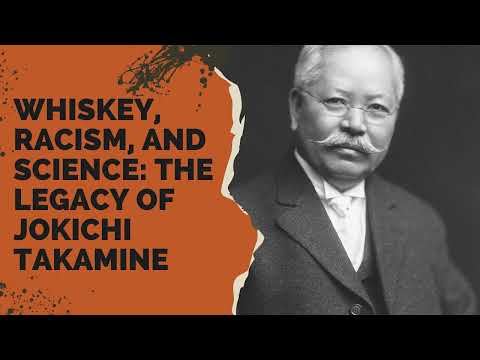
Jokichi Takamine, a pioneering Japanese chemist, overcame systemic racism and adversity to make groundbreaking contributions in medicine and whiskey production. His legacy includes the isolation of adrenaline and the introduction of innovative fermentation techniques, alongside a symbolic gift of cherry blossom trees to the U.S., representing peace and cultural exchange.
In a world filled with challenges and uncertainties, the story of Jokichi Takamine stands out as a beacon of resilience and innovation. Born in 1854 in Taka, Japan, Takamine's life journey is a testament to overcoming adversity, particularly in the face of systemic racism and prejudice. His contributions to science and culture have left an indelible mark, making his story one worth exploring.
Jokichi Takamine was born during the Meiji Restoration, a transformative period that modernized Japan. A gifted student, he graduated from the University of Tokyo with degrees in chemistry and engineering. His brilliance earned him a government scholarship to study abroad, first in Glasgow and later in Paris. This exposure to Western science and industry shaped his innovative mindset and set the stage for his future breakthroughs.
Upon returning to Japan, Takamine initially worked for the government, modernizing its chemical industry. However, his entrepreneurial spirit soon took over. In 1894, he created Taka-Diastase, an enzyme-based digestive aid that became a global success, widely prescribed by doctors. This innovation not only established Takamine's reputation as a leading chemist but also earned him a gold medal at the 1893 World's Fair in Chicago.
Takamine's most famous achievement came in 1901 when he became the first scientist to isolate a hormone, successfully purifying adrenaline. This groundbreaking discovery revolutionized medicine, providing a treatment for asthma, severe allergic reactions, and other life-threatening conditions. Today, his work serves as the foundation for the EpiPen, a device that has saved millions of lives.
In the 1890s, Takamine turned his scientific expertise towards the booming whiskey industry. He introduced a Japanese fermentation technique using Koji mold, traditionally used to make sake. This method was more efficient than traditional Western techniques and promised to transform whiskey production. However, instead of being celebrated, Takamine faced intense racism and opposition from many American distillers who viewed him as a threat to their industry.
Takamine's journey in the whiskey industry was fraught with challenges. His factory mysteriously burned down, an act many believed to be sabotage. Additionally, he faced relentless legal battles over his patents, which drained his resources. Ultimately, systemic prejudice forced him to abandon his whiskey endeavors, highlighting the harsh realities of racism in business.
Despite these setbacks, Takamine's resilience remained unshaken. In 1910, he made a significant contribution not in science, but in diplomacy, by donating 2,000 cherry blossom trees to Washington, D.C. This gift symbolized peace and friendship between Japan and the United States. The trees, planted along the Tidal Basin, have become an enduring symbol of beauty and unity, celebrated annually during the National Cherry Blossom Festival.
Takamine's achievements were groundbreaking, but his journey was far from easy. He faced systemic racism throughout his career, from doubters in the scientific community to outright sabotage in the business world. His marriage to an American woman, Carolyn Hitch, was also scrutinized in a society that frowned upon interracial relationships. Yet, Takamine's perseverance allowed him to leave an incredible mark on the world.
Jokichi Takamine's story is one of relentless innovation and resilience in the face of adversity. He reminds us of the power of persistence, the importance of cultural exchange, and the transformative impact of science and generosity. His life teaches us that barriers—whether societal, cultural, or systemic—can be overcome by those who refuse to give up on their vision. Takamine's legacy continues to inspire and impact lives worldwide, making his story a vital part of our shared history.