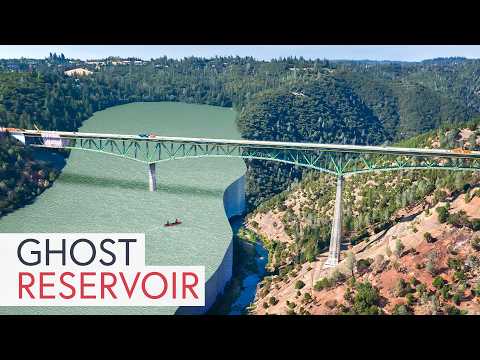
The Foresthill Bridge, California's fourth-tallest bridge, was built as part of the Auburn Dam project, which faced numerous challenges and ultimately stalled. This blog explores the bridge's history, the ambitious plans for Auburn Dam, and the lessons learned about large-scale infrastructure projects.
The Foresthill Bridge, soaring over 700 feet above the North Fork of the American River near Auburn, California, is the fourth-tallest bridge in the United States. Opened in 1973, it was initially celebrated as an engineering marvel. However, its existence raises questions about the rationale behind its construction, given that it connects a relatively small community to rural areas and was built in anticipation of a dam project that never came to fruition.
California's Central Valley is a vital agricultural region, and the management of its water resources has been a longstanding challenge. In 1933, the federal government initiated the Central Valley Project, aiming to store water in the northern part of the valley and distribute it to the drier southern regions. This project included the construction of the Folsom Dam in 1955, which was intended to provide flood protection for Sacramento. However, it soon became apparent that Folsom Dam did not offer the expected level of flood protection, leading to the proposal of the Auburn Dam in 1968.
The Auburn Dam was envisioned as a solution to the inadequacies of Folsom Dam. It was to be the tallest dam in California, built upstream to manage the variable flows of the American River. Construction began in the early 1970s, which included rerouting the river and extensive geological surveys. However, the geology of the site proved more complex than anticipated, leading to concerns about the dam's stability and safety.
As construction progressed, engineers discovered that the underlying rock was not as stable as expected. The presence of compressible zones and numerous fissures raised alarms about the dam's ability to withstand the immense pressure it would face. A foundation treatment program was initiated to address these issues, but the project faced further setbacks when an earthquake near Oroville Dam in 1975 raised concerns about the potential for seismic activity to trigger catastrophic failures in large dams.
Despite the challenges facing the Auburn Dam project, the Bureau of Reclamation decided to proceed with the construction of the Foresthill Bridge. The bridge was necessary to ensure continued access between Auburn and the Sierra foothills, especially given the risk of overtopping the existing low-water bridge during construction. The Foresthill Bridge was designed as a permanent structure, high enough to span the future reservoir.
The Foresthill Bridge was completed in 1973 and was initially the second-highest bridge in the United States. Its design featured a striking steel cantilever structure supported by slender concrete piers. However, as the years passed, it became evident that the Auburn Dam project was faltering.
By the 1980s, new dam designs emerged that could withstand seismic activity, but public and governmental support for the Auburn Dam waned. Rising construction costs and improved flood management strategies at Folsom Dam made the Auburn Dam less appealing. Environmental concerns also grew, as the dam would flood canyons and disrupt ecosystems.
In 1986, a significant flood event reignited interest in the Auburn Dam project, but investigations revealed that mismanagement at Folsom Dam had exacerbated the flooding. This incident highlighted the complexities of managing water resources and the risks associated with large-scale infrastructure projects.
Despite the eventual cancellation of the Auburn Dam project, the Foresthill Bridge remains a prominent feature of the landscape. It underwent a major seismic retrofit in the 2010s to enhance safety and has been part of ongoing inspections due to concerns about the materials used in its construction.
The Foresthill Bridge stands as a testament to the ambitious spirit of mid-20th century American infrastructure projects, while also serving as a reminder of the caution that must accompany such endeavors. The lessons learned from the Auburn Dam project reflect the need for careful consideration of environmental impacts, community needs, and the long-term viability of large-scale public works.
The story of the Foresthill Bridge and the failed Auburn Dam project encapsulates the challenges of balancing ambition with caution in infrastructure development. As we move forward, it is crucial to apply these lessons to future projects, ensuring that they serve the public good without causing irreparable harm to the environment or communities. The Foresthill Bridge, while perhaps out of place, symbolizes a pivotal moment in the history of American engineering and infrastructure planning.