The US economy presents a mixed picture, but young Americans face significant challenges. A low-hiring job market and rising national debt create barriers for young job seekers, leading to higher unemployment rates and long-term financial burdens. This blog explores the reasons behind these trends and their implications for the future.
Getting a read on the American economy is challenging, especially for young people entering the workforce. While some indicators suggest stability, the reality is that young Americans are facing significant hurdles. This blog post delves into the two primary reasons why the economy is particularly tough for young people: the job market and the national debt.
The job market in the United States has been characterized by low hiring and low firing rates over the past couple of years. According to the Bureau of Labor Statistics (BLS), job creation has been weak, yet the overall unemployment rate has remained relatively steady. This paradox arises because companies are hesitant to fire employees during economic uncertainty, leading to a stagnant job market.
Recent data from the BLS indicates a consistent decline in hiring, quitting, and new job openings since the pandemic. The hiring rate is currently at its lowest level since 2013. This situation has fostered a sense of pessimism among job seekers, with 20% reporting that jobs are hard to come by—the highest figure since 2021. Furthermore, the perceived probability of finding a new job has dropped to 45%, the lowest since June 2013.
The low hiring rates can be attributed to economic uncertainty, particularly influenced by previous tariff policies. Conversely, the low firing rates are likely a response to the tight labor market that emerged post-pandemic, where businesses struggled to find workers and had to offer higher wages to attract talent. As a result, companies are reluctant to let go of existing employees, fearing they may not be able to replace them easily.
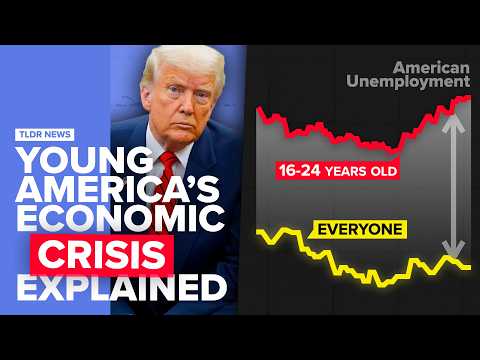
This low-hiring, low-firing environment is detrimental to young people entering the job market. The unemployment rate for individuals aged 16 to 24 has steadily increased over the past two years, currently sitting at 10.5%, the highest since 2016, excluding the pandemic. New entrants to the job market now account for 13.4% of the overall unemployed population, marking a 37-year high. Recent college graduates are particularly affected, with their unemployment rate surpassing that of the general population for the first time in decades.
The rise of artificial intelligence (AI) is also contributing to the challenges faced by young graduates. A study from Stanford University found that young graduates in AI-exposed occupations experienced a 13% relative decline in employment, while more experienced workers in the same fields saw stable or growing employment rates. This trend is particularly pronounced among young men, whose unemployment rates are rising faster than those of young women.
The immediate effects of this job market crisis are concerning, but the long-term implications are even more troubling. Research indicates that early career unemployment can lead to permanently lower earning potential due to lost opportunities for skill development and experience.
In addition to the job market challenges, young Americans are also facing the consequences of a ballooning national debt. Despite previous promises to balance the budget, the US has recorded its largest budget deficit ever (excluding the pandemic) in the first 11 months of the current fiscal year. Projections indicate that the budget deficit could reach about 6% of GDP by 2025, the largest in the developed world according to the International Monetary Fund (IMF).
The Treasury Department anticipates that the national debt burden will exceed 200% of GDP by 2050. This chronic deficit and growing debt raise concerns not only about potential fiscal crises but also about the long-term implications for future generations. Unlike productive investments that can benefit society, the current debt levels are primarily financing tax cuts for the wealthy, raising questions about the sustainability of such fiscal policies.
The increasing national debt represents a significant burden for young Americans, who will ultimately be responsible for repaying this debt through higher taxes. The current fiscal policies do not seem to prioritize productive investments that could benefit future generations, leading to a cycle of intergenerational inequality.
The combination of a challenging job market and rising national debt paints a bleak picture for young Americans. As economic conditions evolve rapidly, it is crucial for individuals to enhance their critical thinking skills to navigate these complexities. Engaging with educational resources can empower young people to better understand the economic landscape and prepare for the future.
In summary, while the US economy may appear stable from certain perspectives, the reality for young Americans is one of uncertainty and challenge. Addressing these issues will require thoughtful policy changes and a commitment to creating a more equitable economic environment for future generations.