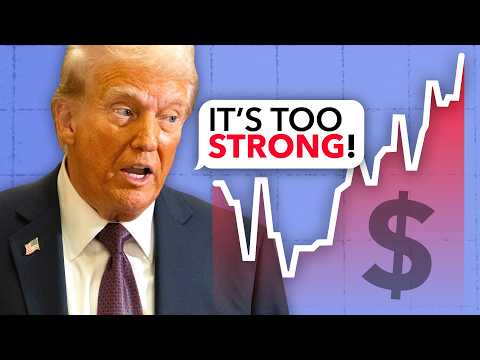
The US dollar has surged to a 40-year high, driven by economic performance and anticipated policies from Trump. While this strengthens American purchasing power, it poses challenges for global economies and contradicts Trump's goals of reducing the trade deficit and revitalizing manufacturing.
The recent surge of the US dollar to a 40-year high has significant implications for both the United States and the global economy. This rise, while seemingly beneficial for the US, presents challenges that could undermine the ambitions of President Trump, particularly in terms of trade and manufacturing.
To grasp the strength of the dollar, it is essential to look at the dollar index, which measures the dollar's value against a weighted basket of currencies. According to the Federal Reserve's broad real dollar index, the dollar's value has been steadily increasing since mid-2023, reaching unprecedented levels.
Safe Haven Status: As the world's reserve currency, the dollar is often viewed as a safe haven during times of economic or geopolitical uncertainty. This perception leads to increased demand for dollar-denominated assets, even when the US is a source of turmoil.
Relative Economic Strength: The US economy has outperformed its G7 peers in terms of GDP growth since the pandemic. Research indicates that the US has seen the best GDP growth in the G7, even when adjusted for population and inflation. This economic performance has attracted investment and capital flows into the US, further boosting the dollar.
Trump's Economic Policies: The anticipated economic policies of President Trump, including massive tariffs and tax cuts, are expected to be inflationary. Tax cuts would increase household spending, putting upward pressure on prices, while tariffs would raise the cost of imports. Higher inflation could lead to increased interest rates from the Federal Reserve, making dollar deposits more attractive and pushing the dollar's value even higher.
Tariffs imposed by Trump have historically led to a depreciation of other currencies, such as the yen, which has fallen by about 10% since 2018. As the dollar strengthens against other currencies, it becomes more expensive for foreign economies to trade, further solidifying the dollar's position.
However, the strong dollar poses significant challenges for the rest of the world, particularly for emerging market economies:
Higher Import Costs: Essential imports, such as oil, become more expensive when priced in dollars, potentially leading to inflation in other countries.
Credit Accessibility: A strong dollar can make it more difficult for countries to secure credit for both sovereign borrowing and private investment. This situation can stunt growth and lead to austerity measures in affected nations.
Historically, a strong dollar has triggered debt crises in the past, as seen in the 1980s. Although developing countries today issue fewer dollar-denominated bonds, the risks remain.
The strong dollar also presents challenges for Trump, as it suggests that markets expect the Federal Reserve to resist his inflationary policies through interest rate hikes. Additionally, a strong dollar contradicts Trump's stated goal of reviving American manufacturing, as it makes US exports less competitive internationally. This tension highlights the complexities of managing dollar policy, especially when balancing the desire for a cheaper dollar against the need to maintain its reserve status.
The surging US dollar reflects a complex interplay of economic performance, investor sentiment, and anticipated policy changes under Trump. While it brings certain advantages to the US, it also creates significant challenges for the global economy and contradicts some of Trump's key objectives. As the situation evolves, careful navigation of these economic dynamics will be crucial for both the US and its international partners.