This article explores the enigmatic nature of supermassive black holes and introduces the concept of dark stars, which may hold the key to understanding their formation. It discusses the role of dark matter, the implications of recent astronomical discoveries, and the potential for new insights into the universe's structure.
The universe is filled with mysteries, and one of the most perplexing is the existence of supermassive black holes. These colossal entities, found at the center of nearly every galaxy, hold galaxies together with their immense gravitational pull. Despite their significance, the origins of supermassive black holes remain largely unknown. This article delves into the theories surrounding their formation and introduces the intriguing concept of dark stars, which may provide answers to this cosmic enigma.
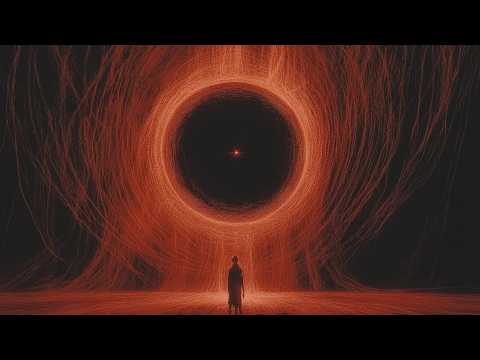
Supermassive black holes are defined as having masses ranging from millions to billions of times that of our sun, yet they are only about 177 times the diameter of the sun. Their density is astonishing, and they play a crucial role in the structure of the universe. However, the question of how they were created continues to baffle scientists.
Primordial Gas Clouds: In the early universe, vast clouds of primordial gas, primarily hydrogen and helium, were common. When these clouds collapsed, they typically formed stars. However, if the collapse occurred rapidly enough, it could theoretically bypass star formation and lead directly to the creation of a supermassive black hole. The challenge here is that as a gas cloud collapses, it cools quickly, leading to fragmentation and star formation instead.
Primordial Black Holes: Another theory suggests that primordial black holes formed from density fluctuations in the hot early universe, shortly after the Big Bang. These black holes could later coalesce to form supermassive black holes, but evidence for their existence remains elusive.
Dark matter is a significant component of the universe, comprising about 27% of its total mass. In contrast, visible matter makes up only 5%. Despite extensive research, the nature of dark matter remains a mystery. One hypothesis is that dark matter consists of weakly interacting massive particles (WIMPs), which do not interact with regular matter but can annihilate each other, producing energy.
What if supermassive black holes were not formed from visible matter but rather from dark matter? This leads us to the concept of dark stars. Unlike regular stars that rely on nuclear fusion, dark stars would be powered by the annihilation of dark matter particles. This process could allow dark stars to grow to sizes much larger than typical stars, potentially leading to the formation of supermassive black holes.
In 2021, NASA launched the James Webb Space Telescope (JWST), designed to observe the universe in the infrared spectrum. This telescope has provided unprecedented insights into the early universe, capturing images of galaxies that existed just a few hundred million years after the Big Bang. Some of these bright galaxies have led scientists to propose that they may actually be dark stars.
Theoretical astrophysicist Katherine Freese and her colleagues suggest that the bright objects observed by JWST could be dark stars, which would have been incredibly luminous due to the annihilation of dark matter. This hypothesis challenges existing models of galaxy formation and suggests that dark stars could have existed in the early universe, potentially outshining entire galaxies.
If dark stars exist, they could fundamentally change our understanding of the universe. They may explain the formation of supermassive black holes and suggest that the universe is more dynamic and interconnected than previously thought. Furthermore, there are indications that dark stars could still be forming today, particularly in regions with high concentrations of dark matter, such as the S star cluster near the supermassive black hole at the center of the Milky Way.
The concept of dark stars presents an exciting avenue for future research in astrophysics. While still theoretical, the idea that dark matter could play a crucial role in the formation of supermassive black holes opens up new possibilities for understanding the cosmos. As we continue to explore the universe with advanced telescopes like the JWST, we may uncover more about these shadowy entities and their impact on the structure of the universe.
In summary, the mystery of supermassive black holes may be intertwined with the elusive nature of dark matter and the potential existence of dark stars, challenging our current understanding of the universe and inviting further exploration into its depths.