Venezuela, despite having the largest oil reserves in the world, has seen its economy collapse due to mismanagement, corruption, and reliance on oil revenues. This blog explores the factors leading to its economic disaster and the lessons to be learned from its failures.
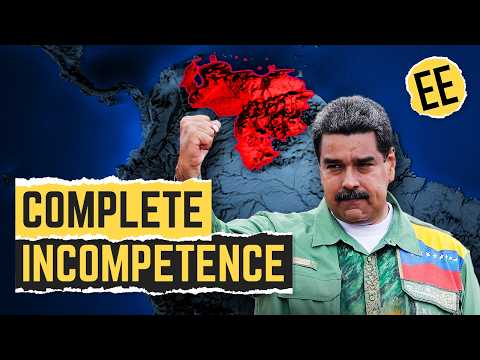
Venezuela is often cited as the most mismanaged economy in the world. This assertion, while bold, is supported by the stark reality of a nation that has squandered its vast natural resources. With the largest oil reserves globally, Venezuela had the potential to achieve significant economic prosperity. Instead, it has witnessed a catastrophic decline, losing over 80% of its GDP in less than a decade. This blog post delves into the factors that led to this economic disaster, the role of governance, and the lessons that can be learned from Venezuela's failures.
Historically, Venezuela has been a petro-dependent nation. Even before the Spanish colonization, indigenous people utilized oil tars for various purposes. Following its liberation in the 19th century, the discovery of oil became a cornerstone for the Venezuelan economy, allowing the government to stabilize through state funding and bribery.
In the 1920s, Venezuela's oil production surged, making it the second-largest oil producer after the United States by 1929. By 1935, oil accounted for 90% of the country's total exports, leading to a phenomenon known as Dutch disease, where the economy became overly reliant on oil exports. Despite this, the country experienced growth, albeit unsustainable, as it imported most of its needs in exchange for oil.
Venezuela's oil industry was dominated by three foreign companies until the government nationalized it, creating Petróleos de Venezuela, S.A. (PDVSA). The oil boom in the early 2000s saw GDP peak at $372 billion in 2012, driven by high oil prices. However, this prosperity was short-lived due to severe mismanagement.
The surge in oil prices in 2004 should have been a boon for Venezuela. However, the government’s response was marked by mismanagement. New leadership sought to revitalize stagnant oil fields but also gutted PDVSA after a strike in 2002, replacing experienced workers with less qualified personnel. While the government initially used oil revenues to fund generous welfare programs, this approach was not sustainable.
Corruption became rampant, with billions of dollars unaccounted for and government jobs becoming the most desirable due to the potential for embezzlement. The populist policies, while popular, created a dependency on oil prices, which proved disastrous when revenues plummeted by 93% between 2012 and 2020.
The economic situation deteriorated rapidly. By 2014, inflation reached 69%, and by 2018, it skyrocketed to over 130,000%. The reliance on oil, coupled with poor governance, led to a catastrophic decline in living standards. The country, once a regional power, became a cautionary tale of economic mismanagement.
A stark contrast can be drawn between Venezuela and Norway, both of which have government-owned oil industries. Norway has successfully managed its oil wealth by establishing the largest sovereign wealth fund in the world, worth $1.6 trillion. This fund allows Norway to fund social programs sustainably, adhering to a strict 3% spending rule based on expected returns.
In contrast, Venezuela's lack of foresight and regulatory measures led to a crippling deficit and a concentration of wealth among a select few. The Venezuelan government’s failure to invest in infrastructure or diversify its economy has left it vulnerable to fluctuations in oil prices.
While internal mismanagement is the primary cause of Venezuela's economic collapse, external factors have also played a role. Since 2005, the United States has imposed targeted sanctions on Venezuelan individuals and entities due to human rights abuses and corruption. These sanctions, while significant, are not the root cause of the crisis but rather a consequence of the government's actions.
Today, Venezuela faces dire challenges. With the worst property rights in the world, foreign investment has dwindled, and the country has lost a significant portion of its skilled workforce due to mass emigration. The government’s attempts to cling to power have only exacerbated the situation, leading to increased sanctions and further isolation.
The future looks bleak for Venezuela. Recent constitutional changes threaten to strip citizens of their rights, and without a clear plan for economic recovery or diversification, the country remains trapped in a cycle of poverty and mismanagement.
Venezuela stands as a prominent example of what can happen when a nation fails to manage its natural resources effectively. With every opportunity to transform its oil wealth into sustainable prosperity, the Venezuelan leadership has instead created a legacy of economic disaster. The lessons from Venezuela's experience are clear: without sound governance, transparency, and long-term planning, even the richest resources can lead to ruin.