This article explores the groundbreaking discoveries of scientists like Ben Bentov, Eugene Malow, and Nikola Tesla, whose revolutionary work on consciousness, cold fusion, and electromagnetic energy challenged mainstream science. Despite their potential to transform humanity, their findings were suppressed, classified, or ridiculed, revealing a pattern of control over knowledge and technology that could have reshaped our understanding of reality and energy.
Throughout history, some scientists have made discoveries so profound that they could have rewritten our understanding of reality itself. Yet, many of these breakthroughs have been met with skepticism, suppression, or outright censorship. This article delves into the stories of such scientists, including Ben Bentov, Eugene Malow, and Nikola Tesla, whose work on consciousness, energy, and physics challenged the established scientific paradigms and faced significant opposition.
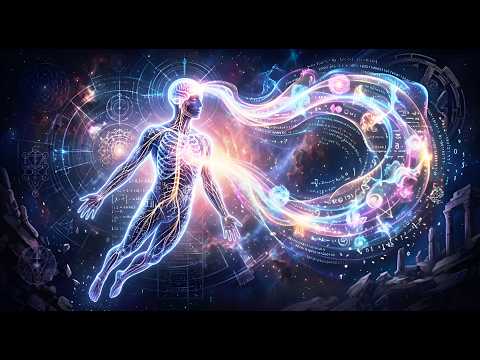
Ben Bentov was a visionary who sought to map the hidden architecture of reality and consciousness. He believed that the nervous system is evolving and that it shapes our perception of reality. Our senses provide a limited view, akin to looking through a narrow slit, but as we evolve, this slit widens, revealing a broader reality.
Bentov proposed that reality is not continuous but flickers like frames of a film reel, suggesting that everything we perceive, including time, is a holographic projection. He drew parallels between the nervous system and the universe, emphasizing patterns that repeat at different scales.
Bentov likened the nervous system to a radio receiver that tunes into specific frequencies, limiting our perception. He conducted experiments using the Ballisto Cardiograph to measure micro vibrations in the body during deep meditation. Remarkably, he found that the body's rhythms synchronized at about seven cycles per second, matching the Earth's natural heartbeat, known as the Schumann resonance.
This synchronization suggested that the body becomes an antenna, resonating with the planet and potentially accessing broader realities.
Bentov's ideas aligned with other scientists like Carl Pribram and David Bohm, who proposed the holographic brain theory and the implicate order of the universe. According to this view, each individual is a fragment of a larger mind, and our thoughts ripple across a universal field.
He illustrated the hologram concept with the analogy of pebbles dropped into water, creating interference patterns that contain information about the whole. Similarly, human consciousness forms a hologram of collective information.
Bentov described the universe as a torus, a melon-shaped structure where matter emerges, expands, and collapses back into energy, cycling through phases of consciousness. This endless flow connects all matter and consciousness in a dynamic balance.
Bentov viewed death not as an end but as a transition, where the soul sheds the body like a diver shedding a wetsuit. Near-death experiences reported vivid perceptions even when brain activity ceased, supporting his view of consciousness recycling through cosmic systems.
In 1989, scientists Martin Fleischmann and Stanley Pons announced they had achieved cold fusion—nuclear reactions at room temperature producing excess heat. This discovery promised nearly infinite clean energy from ordinary water.
Eugene Malow, an engineer with MIT and Harvard credentials, investigated replication experiments at MIT. He discovered that data showing excess heat was deliberately altered to appear negative, a manipulation he labeled fraud.
This altered data was used to discredit cold fusion, leading to a government panel declaring insufficient evidence and effectively killing the field.
The suppression of cold fusion research halted progress toward affordable, clean energy that could have saved millions of lives by providing electricity, clean water, and modern healthcare worldwide. Malow warned that protecting existing energy interests and funding was prioritized over truth and humanity's welfare.
Despite official dismissal, researchers in Japan, Italy, and elsewhere continued experiments, observing unexplained energy outputs and nuclear changes. The Department of Energy revisited the topic in 2004, acknowledging anomalies worth further study.
Nikola Tesla, a pioneer of electromagnetism, challenged the prevailing scientific views of his time. He believed the vacuum of space was not empty but a living medium filled with longitudinal waves—compression and release like sound waves—contrary to the accepted transverse electromagnetic waves discovered by Hertz.
James Clerk Maxwell's original complex equations describing electromagnetism were simplified by Oliver Heaviside into four vector equations. This simplification removed entire layers of physical reality, which Tom Bearden called a "castration" of Maxwell's work.
Physics traditionally discarded the anti-wave, the silent half of wave phenomena, because it complicated mathematics. Bearden argued this omission meant that half of physical reality was ignored, and Tesla's ideas about longitudinal waves and the vacuum were dismissed.
Tesla developed machines based on his theories, producing waves that could transmit energy through the Earth and potentially act as self-targeting weapons. Bearden suggested Tesla's experiments might have caused the Tunguska event in Siberia in 1908.
The Soviet Union's Duga radar system, known as the "Russian Woodpecker," emitted mysterious tapping signals. Some experts believe it was a scalar electromagnetic weapon system capable of producing controlled energy blasts and influencing biological systems remotely.
Experiments in Soviet and other labs demonstrated that diseases could be transmitted electromagnetically between cell cultures without physical contact. Conversely, in 1960s France, Antoine Prior developed a machine that used electromagnetic fields to shrink tumors in lab animals, activating the immune system without drugs or surgery.
Despite promising results, Prior's device was dismantled, and his work largely forgotten.
Tesla died in 1943, and the US government seized his papers. John G. Trump, an MIT engineer, assessed the documents as having no practical value. Tesla was subsequently marginalized by the scientific community, his name reduced to a unit of measurement and a coil.
The stories of Bentov, Malow, Tesla, and others reveal a pattern where revolutionary scientific discoveries that challenge established paradigms face suppression, ridicule, or classification. These discoveries touch on the nature of reality, consciousness, energy, and health, with profound implications for humanity.
Despite efforts to bury these truths, fragments survive, hinting at a deeper understanding of the universe and our place within it. The question remains: what else might still be hidden, waiting to reshape our world?