On July 23, 2009, Edwin Rist executed a bizarre heist at the Natural History Museum at Tring, stealing nearly 300 taxidermied birds. His motive was to supply a niche market for fly-tying enthusiasts. This post explores the museum's significance, the heist's execution, and the implications of Rist's actions on scientific research and conservation.
On the evening of July 23, 2009, a meticulously planned heist unfolded at the Natural History Museum at Tring, a sub-branch of the London Natural History Museum. The thief, Edwin Rist, had a peculiar target: not jewels or art, but nearly 300 preserved tropical birds. This blog post delves into the details of this bizarre theft, the significance of the stolen specimens, and the implications of Rist's actions.
Founded in 1892 as the private collection of Walter Rothschild, the 2nd Baron of the Rothschild Estate, the Natural History Museum at Tring is renowned for its extensive collection of taxidermied birds. After Rothschild's death, he donated his collection to the Natural History Museum in London, which now uses the Tring building as a satellite campus focused on taxidermy.
The museum houses over one million avian specimens, including 750,000 taxidermied skins and 300,000 egg clutches. It boasts specimens representing 95% of the known bird species on Earth. While many of these specimens are kept behind the scenes, they serve crucial roles in scientific research, particularly in studying bird evolution and anatomy.
Richard Prum, an ornithologist and evolutionary biologist at Yale University, emphasizes the significance of these collections. He states, "A lot of the research I do is about the evolution of the anatomy, the morphology, the physical bird. And there's just lots of questions you can't ask about bird biology from wild birds." The museum's specimens provide essential data for researchers, allowing them to study bird variation across locations and understand historical biodiversity.
Moreover, many specimens were collected by notable naturalists like Alfred Russell Wallace and Charles Darwin, making them invaluable historical objects. These collections not only contribute to scientific knowledge but also represent a cultural legacy of exploration and discovery.
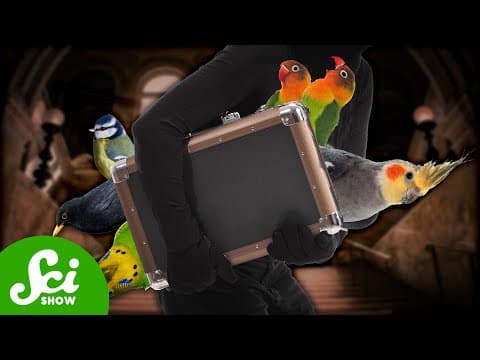
Despite the museum's significance, it was not immune to theft. Edwin Rist, an American student at the Royal Academy of Music in London, was passionate about both music and rare birds. On the night of the heist, he entered the museum armed with wire clippers, a diamond-tipped glass cutter, and a suitcase. Rist activated an alarm when he shattered a window, yet the guard on duty failed to notice.
Once inside, Rist found that the cases holding the birds were not locked. He filled his suitcase with 299 birds from sixteen different species and escaped unnoticed. The museum staff did not realize the theft until a month later when a curator discovered empty drawers during a routine inspection.
Rist's motivation for stealing the birds was not for personal collection but rather to sell them to a niche market of fly-tying enthusiasts. This art form, which involves creating intricate fishing lures using feathers from specific birds, had a dedicated following. Rist, a skilled lure-tier himself, began selling the stolen birds in small pieces, often cutting them apart or plucking individual feathers.
The fly-tying community, which often uses feathers from rare birds, was Rist's target market. Many of these birds are now endangered or protected, making their feathers highly sought after. Rist cleverly marketed the stolen feathers, sometimes claiming they were found at yard sales or sold on behalf of anonymous collectors.
Richard Prum became involved in the case after hearing about the theft. He attended fly-fishing conferences, searching for the stolen birds and tracking down leads. His efforts, along with those of other enthusiasts, eventually led to Rist's arrest on November 12, 2010, just a day after he posted his final lot of feathers for sale online.
Rist's actions had significant repercussions for both scientific research and conservation. Of the 299 birds he stole, only 102 retained research value after he removed their identifying labels and plucked many for feathers. The loss of these specimens not only hindered ongoing research but also meant that irreplaceable historical objects were now in private collections, often dismantled and repurposed.
Prum reflects on the broader implications of Rist's theft, stating, "Birds are beautiful because they're beautiful to themselves. They are aesthetic agents in their own ornamental and social sexual evolution." The exploitation of these birds for human use highlights a complex relationship between humans and nature, where beauty can lead to both admiration and exploitation.
Edwin Rist's bizarre heist serves as a cautionary tale about the fragility of scientific collections and the lengths to which individuals may go for personal gain. While his love for fly-tying and rare birds drove him to commit the theft, it ultimately led to his downfall. The stolen birds, which once contributed to our understanding of biodiversity, now serve as a reminder of the delicate balance between conservation and exploitation in the natural world.