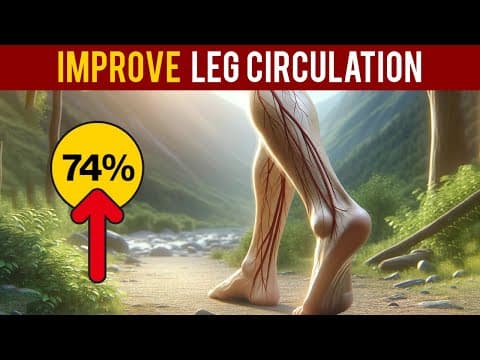
This blog post outlines six effective strategies to improve leg circulation, including leg elevation, wearing compression stockings, regular walking, ankle pumps, knee bends, and massages. These methods can significantly alleviate symptoms of poor circulation such as swelling, pain, and coldness in the legs.
Leg circulation issues can lead to various uncomfortable symptoms, including fatigue, swelling, and pain. In this post, we will explore six effective strategies to improve leg circulation, based on insights from a top vascular specialist.
Poor circulation in the legs can manifest in several ways:
These symptoms indicate underlying issues with arterial blood flow or venous problems. The following steps can help improve circulation in both scenarios.
Elevating your legs while sleeping can significantly help reduce swelling. By placing your legs on pillows or a mattress, gravity assists in returning blood to the heart, improving venous circulation by approximately 10-12%.
Compression stockings are essential for managing varicose veins. It is crucial to wear them correctly: put them on in the morning after a shower and wear them throughout the day, removing them at night. Regular use can enhance circulation by another 20%. Opt for grade two or class two stockings for optimal results.
Engaging in 20 to 30 minutes of walking every day can significantly improve both arterial and venous blood flow. Regular walking can enhance venous circulation by up to 25%. This is a cost-free method that should not be neglected.
Ankle pumps are a simple yet effective exercise to activate calf muscles. You can perform this exercise while sitting or even lying down. By moving your foot up and down, you can repeat this 10-12 times, several times a day. Scientific studies suggest that each push can increase leg circulation by 60-90%.
These exercises should be performed after consulting with a doctor, as they can sometimes be challenging. While lying on your back, lift your legs straight up, bend them towards your chest, and then lower them back down. Repeat this for both legs 10-12 times to improve circulation by about 10% and strengthen leg muscles.
Massage is a somewhat controversial topic regarding its effectiveness in improving circulation. While scientific evidence supports that massage can enhance skin conditions and muscle health, its benefits for circulation are less pronounced compared to exercise. Therefore, massage should not replace physical activity but can be a complementary method.
Improving leg circulation is crucial for overall health and comfort. By following these six steps—leg elevation, wearing compression stockings, regular walking, ankle pumps, knee bends, and massages—you can significantly alleviate symptoms associated with poor circulation. Remember, these methods are beneficial for both arterial and venous circulation issues. For more detailed methods on improving leg circulation, consider exploring additional resources.