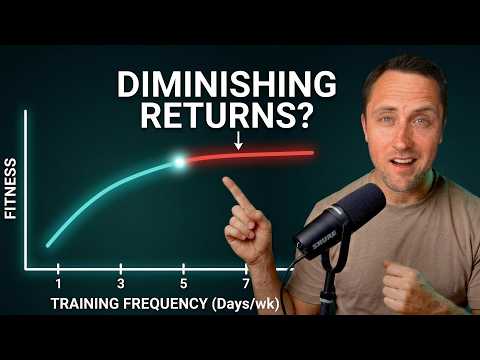
This article explores the relationship between training frequency and fitness improvements, highlighting scientific studies that show when total weekly training load is matched, increasing training frequency does not lead to greater strength or endurance gains. It discusses muscle protein synthesis, endurance adaptations, and implications for mixed-modal sports training, emphasizing that training volume and recovery are key factors rather than frequency alone.
The common belief that training more often automatically makes you fitter seems intuitive. After all, each training session triggers physiological responses like muscle protein synthesis or mitochondrial biogenesis, which contribute to strength and endurance improvements. However, recent scientific insights challenge this notion, especially when the total weekly training load is kept constant.
When you perform a heavy strength training session, your body responds by increasing muscle protein synthesis (MPS) — the process of producing structural proteins such as actin and myosin that build muscle mass. This elevated MPS can last approximately 48 hours post-exercise. Consuming protein, particularly amino acids like leucine, further stimulates this process.
For untrained individuals, these spikes in MPS are potent and lead to significant muscle growth and strength gains over time. However, as one becomes more trained and approaches their physiological muscle mass ceiling, these MPS spikes become shorter and less pronounced. This means it becomes harder to stimulate muscle growth, necessitating progressive overload through increased training volume or intensity.
A well-designed study involving college-aged men with decent strength levels (e.g., back squats averaging 136 kg) compared two groups:
Both groups matched the total weekly training volume and load.
This suggests that when total training volume is controlled, increasing frequency does not necessarily lead to greater strength adaptations.
Endurance training adaptations, such as increased mitochondrial density and improved cardiovascular function, also depend on training load and recovery. A study on elite cross-country skiers and biathletes (VO2 max ~68 ml/kg/min) examined the effects of interval training frequency:
Both groups maintained the same total training volume and intensity.
This indicates that, similar to strength training, higher frequency without increasing total volume does not necessarily enhance endurance performance.
Currently, there is a lack of intervention studies manipulating training frequency in mixed modal sports. To address this, a new study was initiated comparing:
Both groups will have matched overall training loads. The study aims to provide insights into whether frequency impacts performance in sports combining strength and endurance elements.
For example, reintroducing football training after a break, one might initially tolerate only one hard session per week. Gradually adding more sessions can increase total training load and improve performance. However, balancing training types (strength, endurance, sport-specific) and recovery remains essential.
The idea that simply training more frequently makes you fitter is not supported when total weekly training load is controlled. Both strength and endurance studies show no clear advantage of higher frequency over lower frequency training with matched volume. Therefore, focusing on total training load, progressive overload, and adequate recovery should be the priority for optimizing fitness gains.
If you are interested in structured training plans for functional fitness, CrossFit, or endurance, consider programs that emphasize quality and progressive overload rather than just frequency.
Understanding the science behind training frequency can help athletes and fitness enthusiasts design more effective and sustainable training programs tailored to their goals and lifestyles.