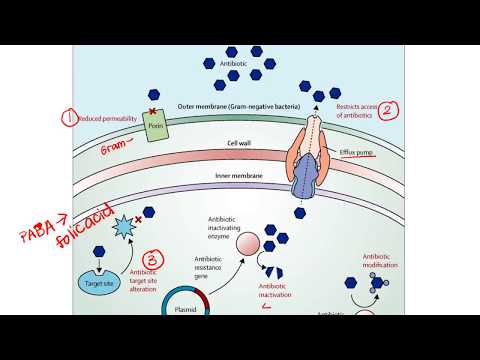
This article explores the mechanisms of antibiotic resistance in bacteria, including reduced permeability, restricted access, altered targets, and antibiotic inactivation. It also discusses how bacteria acquire resistance through vertical and horizontal gene transfer, highlighting the emergence of superbugs like MRSA. Finally, it suggests strategies to combat antibiotic resistance, emphasizing prevention, proper antibiotic use, and the development of new treatments.
Antibiotic resistance is a growing concern in the medical community, as bacteria evolve to withstand the effects of antimicrobial drugs. This article delves into the mechanisms by which bacteria become resistant to antibiotics, the ways they acquire this resistance, and the implications for public health.
There are four primary mechanisms through which bacteria develop antibiotic resistance:
Reduced permeability occurs when antibiotics are less likely to enter bacterial cells. This can happen through several mechanisms:
Even if antibiotics manage to enter the bacterial cell, they may be expelled by efflux pumps. These pumps act like bouncers, pushing the antibiotics back out of the cell, thus preventing their action.
Bacteria can also alter the target sites where antibiotics bind. For instance, mutations in enzymes that are targeted by antibiotics can prevent the drugs from binding effectively. An example is the sulfanilamide class of antibiotics, which inhibit the enzyme that converts PABA to folic acid. If the enzyme mutates, sulfanilamide can no longer inhibit folic acid synthesis.
Bacteria may produce enzymes that degrade antibiotics or modify them, preventing their binding to target sites. For example, Staphylococcus species can produce beta-lactamases that inactivate beta-lactam antibiotics like penicillin by breaking their beta-lactam ring.
Bacteria can acquire antibiotic resistance through two main processes: vertical gene transfer and horizontal gene transfer.
This process occurs during reproduction, where bacteria pass on mutations to their offspring. Bacteria reproduce asexually, and during DNA replication, errors can lead to mutations that confer antibiotic resistance. For example, a mutation in a porin can make it less permeable to antibiotics.
Horizontal gene transfer allows bacteria to share resistance genes within the same generation. There are three primary methods of horizontal gene transfer:
The ability of bacteria to share resistance genes has led to the emergence of superbugs, which are resistant to multiple antibiotics. A notable example is Methicillin-resistant Staphylococcus aureus (MRSA), which poses significant challenges in healthcare settings. According to the CDC, there were over 80,000 cases of MRSA reported in 2011, with thousands resulting in death. While MRSA cases are declining, new strains resistant to last-resort antibiotics like vancomycin are emerging, raising alarms in the medical community.
To minimize the creation of new antibiotic-resistant bacteria, several strategies can be implemented:
Antibiotic resistance is a complex issue that requires a multifaceted approach to combat. Understanding the mechanisms of resistance and how bacteria acquire these traits is essential for developing effective strategies to prevent and manage infections. By implementing preventive measures and improving antibiotic stewardship, we can work towards reducing the impact of antibiotic-resistant bacteria on public health.