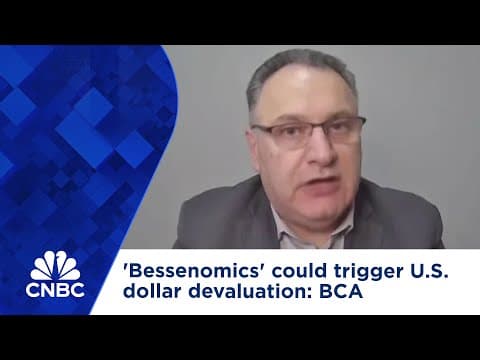
Bessenomics proposes a shift in U.S. economic policy towards easier monetary conditions and tighter fiscal spending, potentially leading to a weaker U.S. dollar as the government seeks to balance economic growth with reduced fiscal outlays.
Bessenomics is a term that encapsulates a proposed economic strategy that aims to reshape the relationship between the Federal Reserve and fiscal policy in the United States. This concept has gained traction in discussions surrounding the current economic climate, particularly in light of President Trump's stance on monetary policy and fiscal spending.
President Trump has been vocal about the need for the Federal Reserve to adopt a more aggressive approach to interest rate cuts. The idea is that the Fed would lower interest rates significantly, but this would come with a condition: the government and Congress must agree to cut fiscal spending. This proposed agreement represents a significant shift in economic policy, moving from a tight monetary policy to a more accommodating stance.
The crux of Bessenomics lies in the delicate balancing act between monetary and fiscal policies. The Federal Reserve is expected to cooperate with the Trump Administration to create a new economic mix characterized by easy monetary policy alongside tighter fiscal policy. This shift is seen as a necessary step to stimulate economic growth while simultaneously addressing concerns about government spending.
One of the major uncertainties surrounding this economic strategy is the extent to which Congress will agree to cut fiscal spending. The willingness of lawmakers to tighten fiscal policy is crucial for the success of this proposed agreement with the Federal Reserve. Without significant cuts in government spending, the anticipated benefits of lower interest rates may not materialize.
As the economic policy shifts, a key question arises: will this lead to inflation? The combination of easy monetary policy and tighter fiscal policy could create inflationary pressures in the economy. Historically, such a shift has been associated with currency depreciation, which raises concerns about the future strength of the U.S. dollar.
The implications of Bessenomics for the U.S. dollar are significant. If the economic policy transitions from a tight monetary and easy fiscal policy mix to a scenario characterized by easier monetary conditions and tighter fiscal constraints, it could lead to a depreciation of the dollar. This is particularly relevant as the dollar has been in a strong bull market over the past four years.
In conclusion, Bessenomics suggests a future where the U.S. dollar may weaken as the government seeks to balance economic growth with fiscal responsibility. The interplay between the Federal Reserve's monetary policy and Congress's fiscal decisions will be critical in shaping the economic landscape. As the administration navigates these challenges, the potential for a weaker dollar could become a reality, impacting not only the U.S. economy but also its trading partners around the world.