This article explores the mechanisms by which substances enter and leave cells, focusing on the roles of the plasma membrane, passive and active transport processes, and the importance of maintaining cellular homeostasis.
In this article, we will delve into the fascinating world of cell biology, specifically focusing on how substances enter and leave the cell. The plasma membrane plays a crucial role in this process, allowing cells to maintain homeostasis by selectively controlling the movement of various substances.
Cells are surrounded by interstitial fluid (IF), also known as extracellular fluid, which contains a myriad of substances such as amino acids, sugars, fatty acids, vitamins, hormones, minerals, and waste products. The plasma membrane is responsible for regulating what enters and exits the cell, ensuring that essential substances are absorbed while waste products are expelled.
The permeability of the cell membrane determines which substances can cross into or out of the cytoplasm. There are three types of permeability:
Human cells possess a selectively permeable plasma membrane, allowing certain molecules to pass easily while restricting others. The permeability is influenced by factors such as size, electrical charge, shape, and the ability of substances to interact with lipids.
Substances can cross the plasma membrane through two main processes: passive transport and active transport.
Passive transport does not require energy, as substances move from areas of high concentration to areas of low concentration, a process known as moving down the concentration gradient. There are several types of passive transport:
Diffusion involves the movement of molecules across the cell membrane. It can be further categorized into:
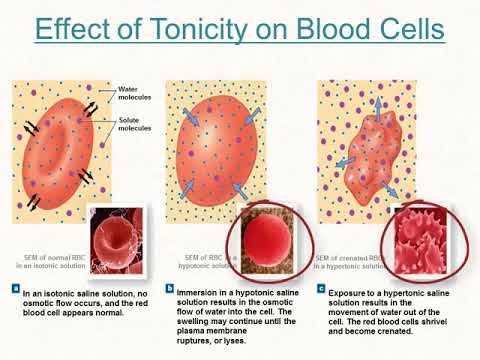
Osmosis is the movement of water across the cell membrane, typically through specialized channels called aquaporins. Water moves from areas of high water concentration to areas of low water concentration, maintaining the balance of solutes inside and outside the cell.
Tonicity refers to the ability of a solution to alter a cell's water volume. There are three types of solutions:
Active transport requires energy (ATP) to move substances against their concentration gradient, from low to high concentration. There are two main types of active transport:
This process involves carrier proteins, known as solute pumps, which require energy to transport ions. A well-known example is the sodium-potassium pump, which moves three sodium ions out of the cell and two potassium ions into the cell, crucial for maintaining cellular function in excitable cells like neurons and muscle cells.
Vesicular transport involves the movement of large particles or fluids across the membrane using vesicles. This process is energy-intensive and can be categorized into:
Understanding how substances enter and leave the cell is fundamental to cell biology. The plasma membrane's selective permeability, along with the mechanisms of passive and active transport, ensures that cells maintain homeostasis and function effectively. By grasping these concepts, we can appreciate the intricate processes that sustain life at the cellular level.