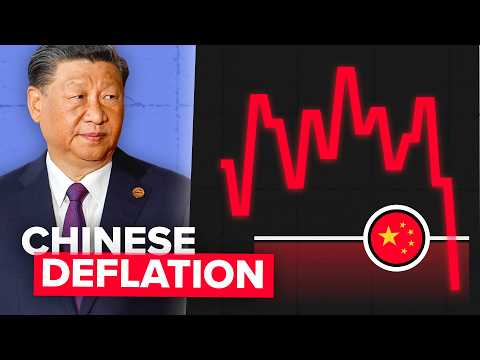
China is facing a severe deflation crisis characterized by falling consumer and producer prices, driven by weak domestic demand and excess supply. This situation poses risks of a balance sheet recession and geopolitical tensions, as the government struggles to stimulate the economy while maintaining industrial dominance.
China's economy is currently grappling with a significant deflation crisis, as highlighted by the National Bureau of Statistics' recent inflation figures for May. For the fourth consecutive month, year-on-year consumer inflation has dipped below zero, raising concerns about the implications of persistent deflation for the Chinese economy and the challenges faced by the Chinese Communist Party (CCP) in addressing this issue.
China utilizes two primary measures to assess inflation: the Consumer Price Index (CPI) and the Producer Price Index (PPI). The CPI tracks the year-on-year change in the cost of a weighted basket of goods commonly purchased by households, while the PPI measures the year-on-year change in the cost of commodities and industrial inputs that factories pay.
As of May 2023, the CPI recorded a deflation rate of -0.1%, and the PPI fell to -3.3%, marking the lowest figure since July 2023. These figures indicate a troubling trend of declining prices that could have far-reaching consequences for the economy.
The primary structural cause of China's deflation is weak domestic demand, a chronic issue that has persisted for years. Several factors contribute to this situation:
In addition to weak demand, there is evidence suggesting that excess supply is also contributing to deflationary pressures. Under China's state-directed capitalism, the government signals its intent to dominate specific industries, prompting provincial governments to support numerous companies in those sectors. This has led to intense competition and an oversupply of goods, particularly in industries like electric vehicles (EVs).
The ongoing price war among Chinese EV manufacturers, such as BYD and Xiaomi, exemplifies this issue. Companies are slashing prices to sell their surplus inventory, often below profitable levels, due to reduced export opportunities caused by tariffs imposed during the Trump administration.
While falling prices may seem beneficial at first glance, persistent deflation can have detrimental effects on the economy:
The deflation crisis also carries geopolitical risks. As domestic demand weakens, Chinese producers may be compelled to export more goods to foreign markets, potentially increasing tensions with trading partners concerned about overcapacity and the impact of cheap Chinese exports on their domestic industries. Although tariffs have reduced China's trade surplus with the U.S., the overall trade surplus remains substantial, indicating ongoing challenges in international trade relations.
To address the deflation crisis, the CCP could consider several strategies to enhance purchasing power among Chinese households:
While the CCP has made tentative moves in this direction, these efforts have not yet proven sufficient to counteract the deflationary pressures. The government's current priority appears to be maintaining industrial dominance and global dependence on Chinese exports, even at the risk of a Japan-style recession.
China's deflation crisis is a complex issue driven by weak domestic demand and excess supply, with significant implications for both the economy and international relations. As the CCP navigates these challenges, the potential for a balance sheet recession looms large, necessitating careful consideration of policies that could restore consumer confidence and stimulate economic growth.