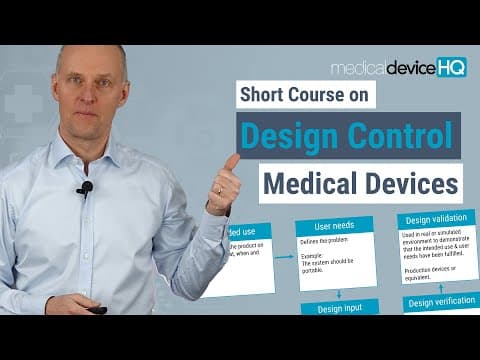
This blog post provides an overview of design control for medical devices, covering essential concepts such as intended use, user needs, design verification, and validation. It emphasizes the importance of adhering to design control requirements for regulatory compliance and successful product development.
Welcome to this introductory course on design control for medical devices. My name is Peter Sibelius, and I have over 20 years of experience in medical device product development, successfully bringing several devices from concept to market in both Europe and the US. This post will provide a foundational understanding of design control, covering key concepts essential for successful product development in the medical device industry.
Design control refers to the systematic process of product development for medical devices, as outlined in the regulations such as 21 CFR Part 820 in the US and ISO 13485 in Europe. Understanding design control is crucial for anyone looking to sell medical devices in these markets, as compliance with design control requirements is mandatory. Without proper design control, market access is not possible.
While many view design control as merely a regulatory requirement, it is much more than that. Adhering to design control principles is an effective way to create products that are safe and meet customer needs. Many successful companies, even outside the medical device industry, adopt these best practices because they recognize their value in product development.
To navigate the design control process effectively, it is essential to understand several key concepts:
The intended use of a medical device is a high-level description that outlines who will use the device, for what purpose, and under what conditions. For example, a thermometer's intended use might be to measure and monitor human body temperature for household use. Defining the intended use early in the project is critical, as it influences regulatory pathways such as 510(k) clearance or pre-market approval.
User needs describe what the users require from the device and should align with the intended use. For instance, a user need for a portable device might specify that it should not exceed a certain weight. Translating these user needs into design inputs is crucial for ensuring that the product meets customer expectations.
Design inputs are the technical requirements derived from user needs. They should be clear and measurable to guide the design process effectively. For example, if portability is a user need, a design input might specify that the device must weigh no more than 10 kilograms.
Design verification is the process of confirming that the design outputs meet the design input requirements. This can involve various methods, such as testing prototypes to ensure they meet specified criteria. For example, verifying that a device weighs less than the defined limit can be done using a calibrated scale.
Design validation ensures that the device meets the intended use and user needs in a real-world or simulated environment. This may involve testing with actual users or conducting clinical investigations, depending on the device's complexity and intended use.
In the EU, medical devices are regulated by competent authorities, such as the Medicines and Healthcare Products Regulatory Agency (MHRA) in the UK or the FDA in the US. These organizations oversee compliance with design control requirements and conduct audits through notified bodies. Understanding the role of these authorities is essential for navigating the regulatory landscape.
The product development process in medical devices typically follows several phases:
Understanding design control is vital for anyone involved in the development of medical devices. It encompasses a range of concepts and processes that ensure products are safe, effective, and compliant with regulatory standards. For those looking to deepen their knowledge, consider exploring more comprehensive courses on design control and related topics available at medicaldevicehq.com.
If you have questions or would like to learn more about design control, feel free to reach out for further information or support.