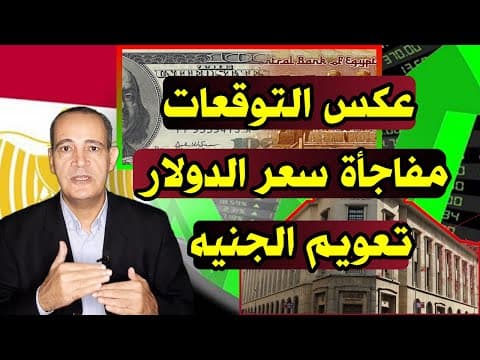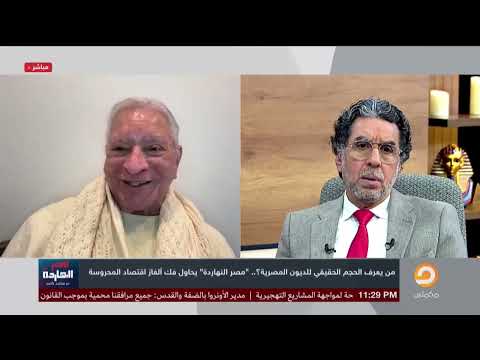
Dr. Mahmoud Wahba discusses the complexities of Egypt's national debt, revealing discrepancies in reported figures, the impact of internal and external borrowing, and the implications for the country's economy.
In a recent discussion, Dr. Mahmoud Wahba, a former economics professor at New York University and a businessman, provided a comprehensive analysis of Egypt's national debt. This blog post summarizes his insights, focusing on the complexities of the debt situation, the discrepancies in reported figures, and the broader implications for the Egyptian economy.
Dr. Wahba highlighted that the total debt of Egypt is a contentious topic, with various sources providing conflicting figures. A website cited by a friend of Dr. Wahba claims that Egypt's debt stands at 380 billion dollars. However, he pointed out that the Egyptian government reported the external debt to be around 300 billion dollars in 2022, while other sources, including Al Arabiya, suggested that the total debt could be as high as 13 trillion Egyptian pounds, which translates to approximately 262 billion dollars.
Dr. Wahba emphasized the importance of distinguishing between internal and external debt. The external debt is typically denominated in hard currencies, while internal debt is in Egyptian pounds. He noted that the government has not been transparent about the internal debt, which complicates the overall understanding of Egypt's financial obligations.
The discussion revealed a significant lack of clarity regarding the actual figures of Egypt's debt. Dr. Wahba expressed skepticism about the reliability of the numbers provided by the government and international organizations like the World Bank and the International Monetary Fund (IMF). He suggested that the true figure for Egypt's total debt, combining both internal and external, could be closer to 500 billion dollars.
Dr. Wahba explained that the Central Bank of Egypt plays a crucial role in managing the country's debt. The bank collects surplus funds from commercial banks and uses them to finance the budget deficit. This practice raises concerns about the sustainability of Egypt's debt levels, especially given the rising internal debt.
The implications of Egypt's debt crisis are profound. Dr. Wahba warned that the increasing debt levels could lead to a situation where the government struggles to meet its financial obligations, potentially resulting in a default. He pointed out that the government needs to establish a clear policy regarding borrowing, including setting a maximum limit on debt and defining who has the authority to borrow.
Dr. Wahba stressed the necessity for transparency in reporting debt figures. He argued that without accurate data, it is impossible to formulate effective economic policies. He called for the establishment of a committee to review and regulate borrowing practices in Egypt, ensuring that all stakeholders are held accountable.
Dr. Mahmoud Wahba's insights into Egypt's debt crisis shed light on the complexities and challenges facing the country's economy. The discrepancies in reported figures, the lack of transparency, and the rising levels of both internal and external debt pose significant risks. As Egypt navigates its financial landscape, it is crucial for the government to adopt clear policies and practices that promote accountability and sustainability in its borrowing practices.