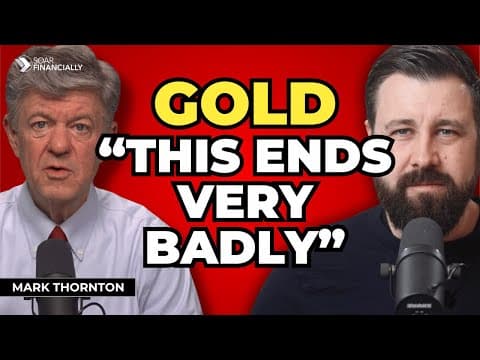
Mark Thornton discusses the implications of increased government spending on GDP, employment, and the economy, arguing that such spending often does not reflect true economic value and can hinder overall economic performance.
In a recent episode of the Minor Issues Podcast, Mark Thornton from the Mises Institute delves into the complexities of fiscal policy and its effects on the economy. As we approach a new year, Thornton emphasizes the importance of understanding the role of government spending in shaping economic outcomes.
Thornton begins by reflecting on the current economic situation, noting that his earlier prediction of an official recession beginning in late 2024 seems increasingly unlikely. He attributes this shift to several factors, including the recent presidential election results, which have brought a sense of stability and optimism to the market.
The election of Donald Trump has had immediate positive effects on the economy, with stock prices rising and unemployment reports showing improvement. Thornton highlights that the election's conclusion has alleviated uncertainty, allowing businesses to expand and create new job openings. This pent-up demand for expansion is a significant factor in the current economic climate.
Thornton shifts the focus to fiscal policy, specifically government spending, and its relationship with Gross Domestic Product (GDP). He argues that increased government spending has played a crucial role in the ongoing economic expansion, influencing GDP, employment, and stock prices.
The podcast discusses several key pieces of legislation that have contributed to increased government spending:
These policies have resulted in trillions of dollars in spending and borrowing, significantly impacting the national debt. Thornton presents data showing that from the fourth quarter of 2019 to the third quarter of 2024, GDP increased by $7.4 trillion, a 33.8% rise, while federal spending surged by $2.26 trillion, or 47%.
Thornton emphasizes a critical point: the increase in government spending does not equate to an increase in true economic value. He argues that government spending often fails to enhance the productive capacity of the economy. Critics of recent spending initiatives have pointed out that these expenditures may not only be unnecessary but could also be misdirected and ineffective.
The podcast raises important questions about the nature of government spending. Thornton argues that much of it contributes little to economic value and can even be detrimental to human flourishing. He asserts that government programs often generate paychecks and inflate GDP numbers without improving the overall standard of living.
From an Austrian economics perspective, Thornton posits that government spending should not be conflated with the production of goods and services in the private sector. Unlike consumer spending, which reflects voluntary transactions and true market value, government spending may not hold the same significance.
In conclusion, Mark Thornton's analysis of fiscal policy highlights the complexities and potential pitfalls of increased government spending. As we navigate the economic landscape, it is essential to critically assess the impact of fiscal policies on true economic value and overall prosperity. Understanding these dynamics will be crucial as we move forward into the new year and beyond.