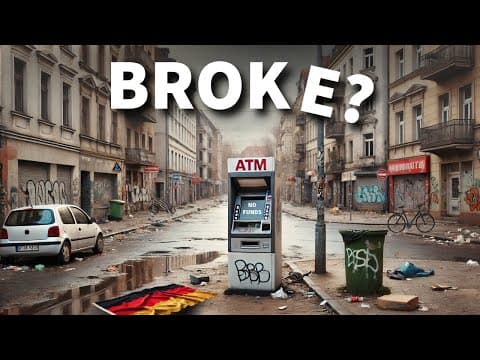
Germany, despite being one of the richest countries in the world, faces significant economic challenges, including rising poverty rates, wealth inequality, and public discontent. This blog explores the complexities of poverty in Germany, the impact of inflation, and the concentration of wealth among the top earners, highlighting the need for policy changes to address these issues.
Germany has long been regarded as a symbol of prosperity and political stability, boasting the largest economy in Europe and the fourth largest in the world by GDP. However, recent years have seen a troubling trend of economic stagnation and social discord. This blog post delves into the complexities of poverty in Germany, the impact of inflation, and the growing wealth disparity that has left many Germans feeling poor and angry.
Despite its reputation as a wealthy nation, Germany is grappling with significant economic challenges. Protests have erupted across the country, with farmers, train engineers, airline workers, and public transit operators striking for better pay and working conditions. These strikes reflect a broader discontent among the populace, as many feel the economic system is failing to meet their needs.
According to recent studies, approximately 14.5% of the German population is at risk of poverty or social exclusion. This translates to around 12 million people. The situation is particularly dire in certain states, such as Bremen, where the at-risk poverty rate reached 28.4% in 2022. Furthermore, 6.1% of the population, or about 5.1 million people, experienced significant material and social deprivation.
In Germany, poverty is often understood in terms of relative poverty, which measures living conditions against the average standards of society. In 2021, Germany ranked as the 20th richest country globally based on GDP per capita, with an average of €50,700 per person. In stark contrast, Luxembourg, the wealthiest country, had a GDP per capita of $136,700.
Inflation has exacerbated the economic struggles faced by many Germans. Basic necessities such as bread, milk, and vegetables have seen price increases of over 12% in just two years. Even with a recent increase in the minimum wage, many full-time workers find it challenging to make ends meet. Students, particularly those reliant on federal funding, are also feeling the pinch, with monthly allowances often falling below the poverty line.
A significant factor contributing to public outrage is the growing wealth inequality in Germany. A survey by the Bundesbank in 2021 revealed that the top 10% of households control more than half of the country's wealth, while the bottom 40% possess a mere €44,000 in net assets. The median household income stands at €107,000, which is only slightly higher than that of Greece, a country with a much higher unemployment rate.
The middle class in Germany is increasingly feeling the strain of rising costs and stagnant wages. While some argue that Germans may not need as much money to live comfortably due to free childcare and public university tuition, the reality is that many households do not own homes and thus miss out on the benefits of rising property values. The median wealth of tenant households is just €16,000, highlighting the financial challenges faced by many.
Germany's tax system has come under scrutiny for favoring wealth concentration. Critics argue that the burden of taxation falls disproportionately on wages, while property and inheritance taxes remain low. This has led to a situation where the wealthiest individuals benefit from favorable tax structures, further widening the gap between rich and poor.
Another aspect of the wealth discussion in Germany is the pension system. Unlike in countries with capital stock pension systems, Germany's pay-as-you-go system does not count pension entitlements as personal wealth. This means that many individuals who have contributed significantly to their pensions may appear poorer on paper, despite having a secure income in retirement.
The growing economic disparities and public discontent in Germany raise important questions about the distribution of wealth and the effectiveness of current policies. Many believe that a healthy dose of anger and frustration could be the catalyst for necessary changes in government policies to address these inequalities.
As Germany navigates its economic challenges, it is crucial for citizens to engage in discussions about wealth distribution, living conditions, and the effectiveness of tax policies. Whether you are a German citizen or an observer from abroad, the issues of rising income inequality and economic hardship resonate globally. The path forward requires collective action and a commitment to creating a more equitable society for all.