Government debt arises from deficits when spending exceeds tax revenue. This blog post explores the nature of government debt, its implications for fiscal policy, and the balance between borrowing and economic stability.
Being a government official is a challenging role. Officials are often expected to cut taxes, increase spending on infrastructure and public services, and maintain public approval. However, this combination of reduced tax revenue and increased spending can lead to significant financial shortfalls. To manage these shortfalls, governments can borrow money, similar to how individuals might seek help from friends when short on rent. This borrowing, however, comes with the expectation of repayment, even though there is no strict mechanism to enforce it.
The United States government has been operating with borrowed money for years, accumulating trillions of dollars in debt. This situation arises from a desire to keep taxes low while simultaneously increasing spending. While many citizens advocate for reduced government debt, the reality is more complex. The relationship between government spending and debt is crucial for maintaining economic stability, but it also carries significant consequences.
To understand government debt, one must first grasp the concept of a deficit. A deficit occurs when a government spends more than it earns in tax revenue within a given year. This shortfall is a flow variable, measured over time, typically annually. When deficits accumulate over multiple years, they contribute to the overall national debt, which is a stock variable representing the total amount owed at a specific moment. As of January 2024, the U.S. national debt stands at approximately 34 trillion dollars.
While the idea of such a massive debt can be alarming, it can be helpful to view government debt as akin to a long-term mortgage rather than high-interest credit card debt. If managed properly, government debt can be a strategic investment that yields long-term benefits. Deficit spending is not merely a political tool; it is a fundamental aspect of fiscal policy, which involves using taxation and spending to influence economic conditions.
Fiscal policy plays a vital role in regulating the economy, particularly during periods of economic instability. When the economy overheats, leading to inflation, or cools down, resulting in recessions, the government can intervene through deficit spending. For instance, during the 2008 banking crisis, the U.S. government enacted a substantial spending bill aimed at stimulating the economy by creating jobs and increasing consumer spending. This intervention helped mitigate the recession's impact, preventing a potential economic depression.
Governments do not borrow money in the same way individuals do. Instead, they issue bonds to raise funds for public spending. A bond is essentially an IOU, where the government promises to repay the borrowed amount with interest after a specified period. Investors are attracted to bonds due to their relatively lower risk compared to stocks, as governments are generally more stable than private companies.
There are three primary types of government bonds: Treasury bills (T-bills), Treasury notes (T-notes), and Treasury bonds (T-bonds). T-bills are short-term investments with maturities of weeks to months, T-notes have maturities ranging from 2 to 10 years, and T-bonds are long-term investments that mature in about 30 years. Each type offers different interest rates and risk levels, allowing investors to choose based on their financial goals.
While government borrowing provides flexibility, it is not without drawbacks. Increased borrowing can lead to a phenomenon known as crowding out, where government borrowing competes with private investment for available funds. This competition can drive up interest rates, making it more expensive for businesses and individuals to borrow money for private projects. Consequently, the government must carefully consider the opportunity costs associated with issuing bonds and the potential impact on private sector investment.
Moreover, as the government borrows more, it incurs additional interest obligations, which can strain future budgets. If tax revenues fail to keep pace with these obligations, it can hinder economic growth, as seen in the case of Greece during its financial crisis.
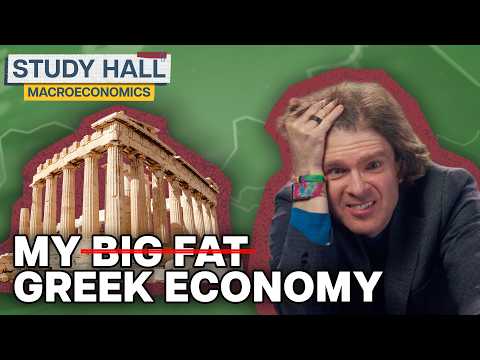
In the aftermath of the 2008 financial crisis, Greece faced severe economic challenges, exacerbated by underreported national debt and tax evasion among the wealthy. The government struggled to meet its debt obligations, leading to a loss of confidence in its economy. As a result, Greece was forced to implement austerity measures, raising taxes and cutting public spending, which further depressed economic activity. The situation culminated in a bailout from the European Central Bank, the European Commission, and the International Monetary Fund, totaling around 300 billion Euros.
The complexities of government debt highlight the delicate balance between providing public services, managing economic stability, and maintaining fiscal responsibility. While deficit spending can stimulate economic growth and provide essential services, it also carries the risk of long-term financial crises. Governments must prioritize their spending and consider the implications of their borrowing decisions carefully. In a world of limited resources and unlimited wants, the promise of lower taxes and expanded services must be tempered with the reality of economic constraints. Understanding these dynamics is crucial for informed discussions about government debt and fiscal policy.