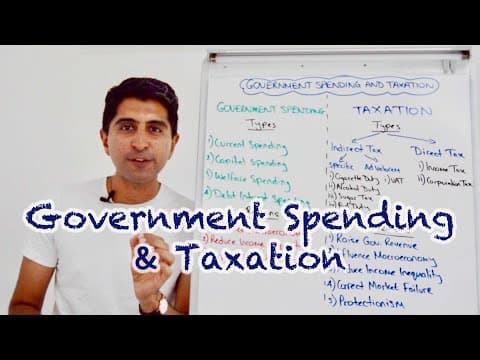
This blog post explores the different types of government spending and taxation, their purposes, and their effects on the economy, including how they influence aggregate demand, income inequality, and market failures.
In this blog post, we will delve into the concepts of fiscal policy by examining government spending and taxation. We will explore the various types of government spending, the reasons behind government expenditures, and the different forms of taxation, along with their implications for the economy.
Government spending can be categorized into four main types:
Current spending refers to the day-to-day expenditures on public services. This includes the maintenance of public services and the payment of public sector wages. It is essential for the ongoing operation of government functions and services that citizens rely on.
Capital spending involves investments in infrastructure projects. This can include new infrastructure developments or significant upgrades to existing facilities. Such spending is crucial for long-term economic growth and development.
Welfare spending encompasses government expenditures on benefits and pensions. This type of spending aims to support individuals in need, thereby raising disposable income for those on lower incomes and contributing to social welfare.
Debt interest spending is the cost incurred by the government to service its debt. This form of spending does not contribute to aggregate demand (AD) as it is non-productive; it merely covers the interest on existing debt.
Governments tend to spend money in the economy for several reasons:
Taxation can be classified into two primary categories:
Indirect taxes are expenditure taxes levied on firms, which can be passed on to consumers. They are paid when goods or services are sold. There are two forms of indirect taxes:
Direct taxes are levied on income and cannot be transferred to others. Common examples include income tax and corporation tax. These taxes are essential for funding government services and initiatives.
Taxation serves several critical purposes in the economy:
In summary, understanding government spending and taxation is crucial for grasping how fiscal policy operates within an economy. Government spending can stimulate economic growth, reduce inequality, and correct market failures, while taxation is essential for funding public services and influencing economic conditions. As we continue to explore fiscal policy, we will look into different taxation systems in future discussions.