This article explores the anatomy and function of the ear, detailing how sound waves are processed through the outer, middle, and inner ear, ultimately leading to the brain's interpretation of sound.
Hearing is a complex process that involves multiple parts of the ear working together to convert sound waves into signals that the brain can understand. This article delves into the anatomy of the ear, explaining how sound travels through its three main sections: the outer ear, the middle ear, and the inner ear.
The ear is divided into three primary sections:
Each section plays a crucial role in the hearing process, ensuring that sound is efficiently delivered to the brain for processing.
The outer ear consists of the pinna and the ear canal. The pinna, which is the visible part of the ear, is unique to each individual, much like fingerprints. Its primary function is to funnel sound waves from the environment down the ear canal toward the middle ear.
Once sound waves reach the middle ear, they strike the eardrum, a thin membrane approximately the size of a dime. This impact causes the eardrum to vibrate. The middle ear also contains the Eustachian tube, which helps maintain proper air pressure on both sides of the eardrum, ensuring it functions correctly.
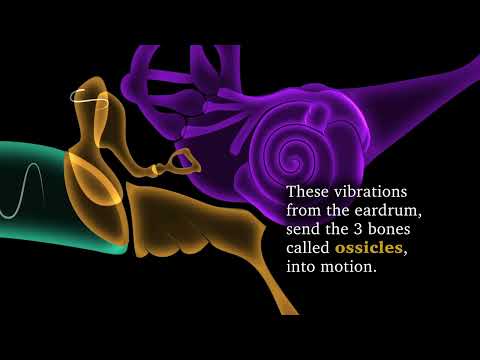
The vibrations from the eardrum set into motion three small bones known as the ossicles. These bones work together to transmit sound vibrations from the middle ear to the inner ear.
The inner ear houses the cochlea, which is the main organ responsible for hearing. The cochlea is a coiled structure filled with fluid and lined with tiny hair cells. When sound vibrations from the middle ear enter the cochlea, they create waves in the fluid inside.
This movement stimulates the hair cells, which produce neurotransmitters. These neurotransmitters generate electrical impulses, also referred to as nerve signals. The auditory nerve then carries these impulses to the brain.
Once the auditory nerve transmits the signals to the brain, the brain processes these signals and decodes them into recognizable sounds. This intricate process allows us to perceive and interpret the vast array of sounds in our environment.
The journey of sound from the outer ear to the brain is a remarkable process that highlights the complexity of human hearing. Understanding how each part of the ear contributes to this process can enhance our appreciation for the sense of hearing and the intricate systems that support it.