This article explores the evolution of scientific thought from the Dark Ages to modern concepts in human behavioral biology, focusing on the limitations of reductionism and the revolutionary idea of emergence. It explains how complex systems like ant colonies and bee hives self-organize without central control, illustrating that more is different and highlighting the intrinsic unpredictability in biological systems.
Human behavioral biology is a complex field that integrates various scientific disciplines to understand how behavior emerges from biological systems. This article delves into the evolution of scientific thought, highlighting the transition from medieval ignorance to the rise of rationality, the power and limits of reductionism, and the revolutionary concept of emergence.
In the year 410, the fall of Rome marked the beginning of the Dark Ages in Europe, a period characterized by profound ignorance and loss of knowledge. During this time:
This era was marked by provincialism, with individuals rarely traveling beyond 12 miles from their birthplace and dialects varying significantly even over short distances.
A turning point came in 1085 when Christian forces conquered Toledo, Spain, gaining access to a vast Islamic library containing approximately 60,000 volumes—far surpassing the combined Christian European libraries.
This access to knowledge:
Thomas Aquinas, about a century later, famously stated that even God could not create a triangle with more than 180 degrees, symbolizing the triumph of rationality and scientific laws over theological dogma.
Reductionism is the scientific approach of understanding complex systems by breaking them down into their component parts. Key features include:
For example, if a clock stops working, a reductionist approach involves disassembling it, identifying the faulty gear, repairing it, and reassembling the clock.
Reductionism has been instrumental in many scientific advances, such as:
However, reductionism assumes that variability in data is noise to be minimized with better measurement tools.
Research on testosterone and aggression across different biological levels—from societal to molecular—revealed that variability remains constant regardless of the scale of analysis. This suggests:
This challenges the reductionist view and points to the need for alternative frameworks to understand complex biological phenomena.
Emergence is the concept that complex systems exhibit properties and behaviors that cannot be predicted by studying their individual components alone. Philip Anderson, a Nobel laureate, summarized this as "more is different."
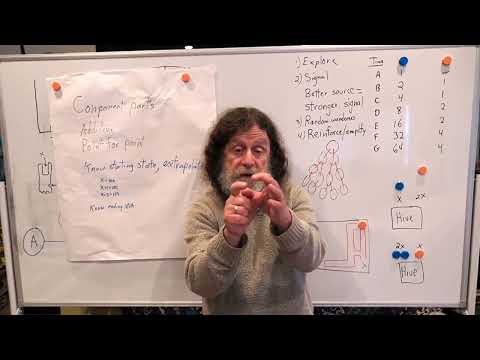
Emergent systems often self-organize through simple rules and interactions:
The principles of emergence and the limitations of reductionism suggest that:
The journey from the Dark Ages to modern science highlights the evolution of our understanding of complex systems. While reductionism has provided powerful tools for dissecting biological mechanisms, it falls short in explaining the intrinsic variability and emergent properties of living systems. Embracing emergence allows us to appreciate how simple components self-organize into complex, adaptive behaviors, offering profound insights into human behavioral biology and beyond.
Future explorations will delve deeper into how these principles manifest in neural and ethological contexts, further bridging the gap between biology and behavior.