This blog post summarizes the recent press briefing by Israel's central bank regarding its monetary policy decisions in light of the ongoing geopolitical tensions and economic challenges. The central bank has decided to maintain interest rates while addressing inflation concerns and the economic impact of the conflict.
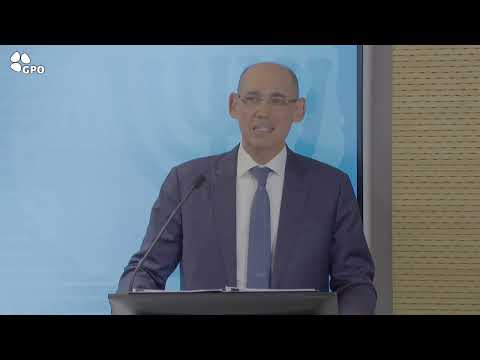
In a recent press briefing held on October 9, 2024, Israel's central bank governor, Amir Yaron, addressed the media following the monetary policy committee's decision. This briefing comes at a critical time as Israel faces ongoing geopolitical tensions and economic challenges stemming from the conflict. The governor's remarks highlighted the bank's commitment to maintaining financial stability while navigating these turbulent times.
Governor Yaron opened the briefing by acknowledging the significant challenges facing the Israeli economy due to the ongoing conflict, particularly the heightened intensity of fighting in the northern region. He emphasized that the geopolitical uncertainty continues to impact economic conditions, necessitating careful management of both fiscal and monetary policies.
The monetary policy committee decided to keep interest rates unchanged, citing the need for a cautious approach in light of rising inflation and economic instability. The committee's discussions focused on analyzing various economic processes and the war's effects on the economy, particularly the inflationary pressures that have emerged.
Israel has experienced a notable increase in inflation, which has consistently exceeded the upper limit of the target range. The annual inflation rate rose significantly in August, driven by broad increases across various sectors. The committee noted that inflation expectations indicate a further rise in early 2025, with a potential moderation only in the latter half of the year.
Despite the challenges, there are signs of gradual recovery in economic activity. The second quarter of 2024 saw low growth, but recent indicators suggest a slight improvement in private consumption and overall economic performance. However, the committee warned that the economy remains below its long-term growth trend, with significant hurdles still to overcome.
The housing market continues to face upward pressure on prices, with a reported increase of 5.8% in property values over the past year. The volume of mortgages remains high, indicating ongoing demand despite the conflict's impact on construction activities.
The governor stressed the importance of responsible fiscal management to ensure financial resilience and future economic growth. The committee highlighted the need for permanent fiscal adjustments to address the rising costs associated with the conflict and to stabilize the economy.
On a global scale, the geopolitical tensions in the Middle East have had a moderate impact on financial markets, with rising oil and gas prices. The U.S. Federal Reserve and other central banks continue to implement monetary easing, which may influence Israel's economic landscape moving forward.
The Israeli economy is currently navigating a complex landscape marked by ongoing conflict and economic uncertainty. The central bank's decision to maintain interest rates reflects a cautious approach aimed at stabilizing the economy while addressing inflationary pressures. As the situation evolves, the bank remains committed to monitoring economic indicators and adjusting policies as necessary to support recovery and growth.
In closing, Governor Yaron expressed solidarity with the soldiers and families affected by the conflict, emphasizing the importance of unity and resilience during these challenging times. The central bank's ongoing efforts will be crucial in steering the economy towards stability and growth in the face of adversity.