This blog post explores the phenomenon of lunar eclipses, explaining how they occur, why the moon appears red during these events, and the visual impact of layering multiple eclipses. It highlights the unique perspective of viewing Earth from the moon during an eclipse and the science behind the scattering of light.
Lunar eclipses are fascinating celestial events that capture the attention of skywatchers around the world. Recently, a lunar eclipse was visible from many parts of Asia, prompting discussions about the science behind these occurrences. In this blog post, we will delve into the mechanics of lunar eclipses, the reasons behind the moon's reddish hue during these events, and the unique visual experiences they offer.
A lunar eclipse occurs when the Earth passes between the sun and the moon, causing the Earth's shadow to fall on the moon. This alignment can only happen during a full moon when the sun, Earth, and moon are in a straight line. Unlike solar eclipses, where the moon casts a shadow on Earth, lunar eclipses allow us to observe the Earth's shadow on the moon.
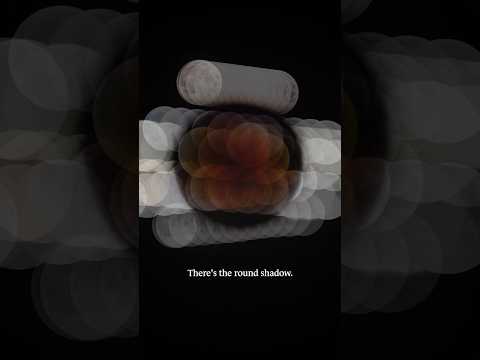
One interesting way to appreciate lunar eclipses is by layering images from multiple eclipses. By taking a time-lapse of several lunar eclipses and stacking them, one can visualize how the moon moves through the Earth's shadow over time. This technique not only highlights the roundness of the Earth but also emphasizes the relative size difference between the Earth and the moon. The moon, being significantly smaller, only passes through a small portion of the Earth's shadow at any given moment.
A common question that arises during a lunar eclipse is: why does the moon appear red? To understand this phenomenon, we can imagine ourselves on the moon during an eclipse. From this vantage point, the Earth would be stationary in the sky, and as the sun is completely obscured by the Earth, the only light reaching the moon is that which has passed through the Earth's atmosphere.
The red hue of the moon during a lunar eclipse is a result of Rayleigh scattering, the same effect that causes sunsets to appear red. As sunlight passes through the Earth's atmosphere, shorter blue wavelengths are scattered out, while longer red wavelengths make it through. Therefore, during a lunar eclipse, the moon is illuminated by the light of all the sunrises and sunsets occurring on Earth at that moment. This scattering of light gives the moon its characteristic reddish color.
Lunar eclipses are not only a spectacular sight but also a wonderful opportunity to explore the science of light and shadow in our solar system. By layering images of multiple eclipses, we can gain a deeper understanding of the Earth's shadow and the unique visual experiences that lunar eclipses provide. The red hue of the moon serves as a reminder of the intricate interplay between light and atmosphere, making each eclipse a captivating event for astronomers and casual observers alike.