This blog post provides a comprehensive overview of Lynch syndrome, its genetic basis, cancer risks, screening methods, management strategies, and the role of lifestyle interventions in cancer prevention, as discussed in the UCC Cancer Seminar Series.
The UCC Cancer Seminar Series featured a presentation by Dr. Hazel, a consultant medical oncologist specializing in cancer genetics. This session focused on Lynch syndrome, an inherited cancer predisposition syndrome, and covered its epidemiology, screening methods, management strategies, and treatment options.
Lynch syndrome is an inherited cancer predisposition syndrome caused by germline pathogenic variants in mismatch repair (MMR) genes, specifically MLH1, MSH2, MSH6, and PMS2. It is an autosomal dominant disorder, meaning that only one copy of the mutated gene is sufficient to increase cancer risk. Population studies estimate that Lynch syndrome affects approximately 1 in 279 individuals.
Carriers of Lynch syndrome have a significantly increased lifetime risk of developing various cancers, with estimates ranging from 40% to 80%. The specific risks vary by gene:
Graphs from the Lynch syndrome database indicate that the highest cancer risks are associated with MLH1 and MSH2 variants, with cumulative lifetime risks of cancer being notably high.
Lynch syndrome tumors exhibit mismatch repair deficiency and microsatellite instability (MSI). The MMR system is crucial for correcting DNA replication errors, and its deficiency leads to a hypermutable state characterized by MSI.
MSI testing can be performed through various methods, including immunohistochemistry and next-generation sequencing. In clinical practice, tumors are screened for MSI to identify potential Lynch syndrome cases. Universal screening for MSI in colorectal and endometrial cancers is recommended, regardless of stage or age.
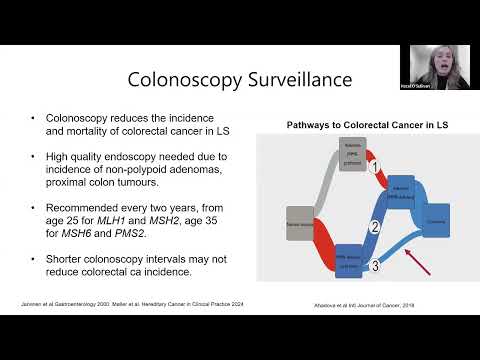
Management of individuals with Lynch syndrome involves assessing both non-modifiable and modifiable risk factors. Non-modifiable factors include age, gender, and family history, while modifiable factors encompass lifestyle choices and adherence to screening protocols.
Lifestyle modifications, including diet and exercise, play a crucial role in cancer prevention for Lynch syndrome carriers. Regular exercise and a diet high in fiber, particularly resistant starch, have shown potential benefits in reducing cancer risk.
Aspirin has been studied as a chemoprophylactic agent for Lynch syndrome. The CAP2 study indicated that long-term aspirin use could reduce the risk of colorectal cancer in Lynch syndrome patients, with recommendations for doses between 150 to 300 mg starting at age 25.
Recent advancements in immunotherapy have shown promise for treating MMR-deficient tumors. The FDA has approved immune checkpoint inhibitors for various cancers associated with Lynch syndrome, including colorectal and endometrial cancers. Ongoing studies are exploring the use of immunotherapy in earlier disease stages and as a preventive measure for Lynch syndrome carriers.
The future of cancer genetics in Ireland includes efforts to mainstream genetic testing and improve access to care. The NCCP is prioritizing cancer genetics, aiming to integrate genetic testing into routine clinical practice to expedite diagnosis and management.
Lynch syndrome is a common inherited condition with significant implications for cancer risk. Effective management requires a personalized approach that includes regular screening, lifestyle interventions, and potential chemoprophylaxis. As research progresses, the integration of immunotherapy and genetic testing into clinical practice will enhance the care and outcomes for individuals with Lynch syndrome.
Thank you for your attention, and I look forward to any questions you may have.