This blog post explores the mechanisms of nuclear energy generation, its advantages over fossil fuels, and the environmental impacts associated with nuclear power, including safety concerns and notable historical meltdowns.
Nuclear energy is a significant source of electricity that has garnered attention for its potential benefits and risks. This blog post will delve into the mechanisms of nuclear energy generation, its advantages over fossil fuels, and the environmental impacts associated with its use.
Nuclear energy primarily comes from a process called nuclear fission. In this process, a neutron is fired at the nucleus of a radioactive isotope, such as uranium or plutonium. These isotopes have unstable nuclei that are prone to breaking apart. When the nucleus splits, it releases a substantial amount of energy in the form of heat. This heat can then be harnessed to generate electricity.
The fission process also releases additional neutrons, which can initiate further fission reactions in a chain reaction. This chain reaction is crucial for maintaining a steady output of energy.
Radioactivity refers to the energy emitted from the breakdown of unstable isotopes. Even without fission, radioactive elements naturally decay, releasing energy. The rate of decay can be measured using the concept of half-life, which is the time required for half of a sample of a radioactive element to decay. For example, cobalt-60 has a half-life of 5.27 years, meaning that after this period, half of a 10-gram sample would remain.
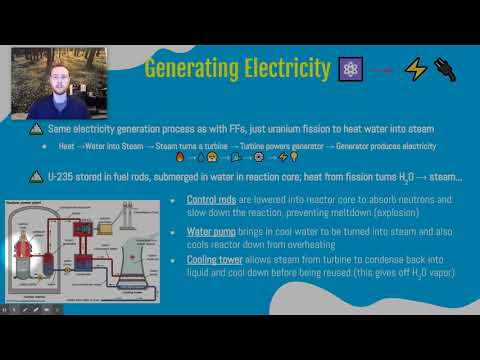
The process of generating electricity using nuclear power is similar to that of fossil fuels, with the key difference being the source of heat. In nuclear power plants, uranium-235 is the most commonly used isotope. The steps involved in electricity generation are as follows:
The reactor core, where the fission occurs, contains fuel rods filled with uranium-235 submerged in water. This setup allows for efficient heat generation and steam production.
Given the potential risks associated with nuclear energy, several safety measures are implemented:
Nuclear energy is often considered a cleaner alternative to fossil fuels. During electricity generation, nuclear power plants do not emit air pollutants such as particulate matter, sulfur oxides, nitrogen oxides, or carbon dioxide. The only gas released is water vapor, which, while a greenhouse gas, is not considered as critical as carbon dioxide or methane due to its rapid cycling in the atmosphere.
Despite its cleaner profile, nuclear energy is classified as a non-renewable resource. The fuel sources, such as uranium and plutonium, are finite and will eventually be depleted.
One of the significant environmental concerns with nuclear energy is the risk of radioactive contamination. This can lead to genetic mutations and increased cancer rates in humans and wildlife. Additionally, spent fuel rods, which remain radioactive for millions of years, pose a storage challenge. Currently, they are often stored on-site in lead-lined containers, but long-term solutions are still being developed.
Nuclear power plants require substantial amounts of water for steam generation and cooling. The discharge of heated water back into local bodies can lead to thermal pollution, which can harm aquatic life by reducing oxygen levels in the water.
Several notable nuclear meltdowns have occurred, each with significant environmental consequences:
The environmental consequences of these incidents include genetic mutations, soil contamination, and long-term health risks for populations in affected areas.
Nuclear energy presents a complex mix of benefits and risks. While it offers a cleaner alternative to fossil fuels and a reliable source of electricity, the environmental impacts and safety concerns associated with nuclear power generation cannot be overlooked. Understanding these dynamics is crucial as we navigate the future of energy production and its implications for our planet.