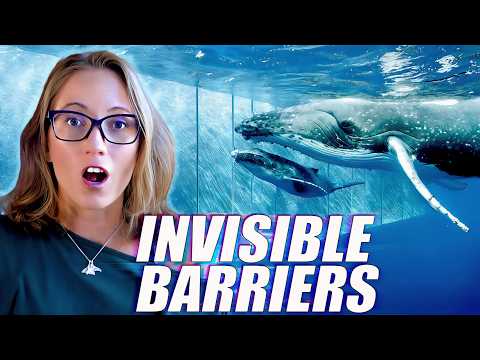
This blog post explores the concept of ocean biogeography, focusing on why certain marine animals, like sea lions, do not inhabit specific regions despite favorable conditions. It discusses barriers that separate marine species, the historical context of biogeography, and the implications for conservation efforts.
The ocean is often perceived as a vast, interconnected body of water where animals roam freely. However, this perception is misleading. In reality, the ocean is a complex mosaic of diverse aquatic environments, separated by various marine barriers that prevent many species from crossing into new territories. This blog post delves into the fascinating world of ocean biogeography, examining why certain animals, such as sea lions, are unable to inhabit specific regions despite seemingly ideal conditions.
Sea lions are a puzzling example in the study of marine biogeography. Found in every ocean except the North Atlantic, their absence in this region is particularly perplexing given that the North Atlantic offers suitable temperatures and an abundance of their preferred prey. Other pinnipeds, like harbor seals, thrive in these waters, yet sea lions have never crossed the tropical Atlantic. This raises the question: why are some animals found in certain places but not others?
The quest to answer this question led to the development of biogeography, a field of science that studies the distribution of species and ecosystems in geographic space and through geological time. Alfred Russell Wallace, often referred to as the father of biogeography, made significant contributions to this field. During his travels, he observed striking differences in animal populations on nearby islands, such as Bali and Lombok, which are separated by a narrow body of water. This observation led to the identification of the Wallace Line, a boundary that delineates distinct biogeographic realms.
The Wallace Line is a significant biogeographic boundary that separates species on either side. For instance, on one side, you find unique marsupials and monotremes, while on the other, placental mammals like apes and elephants dominate. Wallace's work in 1876, particularly his publication "The Geographical Distribution of Animals," laid the groundwork for understanding how natural barriers, such as the Wallace Line, influence species distribution.
While Wallace and his contemporaries understood that the Earth was ancient and had undergone significant changes, they lacked knowledge of plate tectonics. The discovery of the mid-Atlantic ridge and the concept of continental drift revolutionized our understanding of Earth's history. The Wallace Line, for example, is located at the convergence of four major tectonic plates, creating a deep-water channel that has historically prevented species from crossing.
Marine barriers play a crucial role in shaping the distribution of marine life. For a long time, scientists doubted the existence of biogeographic regions in the oceans, assuming that animals like humpback whales could traverse any body of water. However, exceptions abound. For instance, sea lions are absent from the North Atlantic, and penguins are not found in the northern hemisphere.
The distribution of various marine species often aligns with the 30 distinct biogeographic realms identified by researchers. For example:
These distributions highlight how marine barriers, including deep ocean trenches and continental shelves, restrict the movement of species. For instance, smaller sharks and rays, which dwell near the ocean floor, cannot cross deeper waters, while swift currents in deep channels can prevent larger species from migrating.
Temperature differences also create barriers in marine environments. The waters of southern Australia are significantly cooler than those in the north, making them suitable for species like sea lions and fur seals, which are not adapted to warmer temperatures. This temperature gradient also affects predator distribution, as great white sharks are more prevalent in cooler waters.
Humpback whales provide an interesting case study in marine biogeography. While they are found in every ocean, their populations are largely isolated due to differing migration patterns. Humpback whales in the northern and southern hemispheres migrate at different times of the year, preventing interaction between the two populations. Genetic studies have shown that these populations have evolved independently, leading to the classification of at least three distinct subspecies.
The Atlantic and Pacific Oceans were once connected by the Central American Seaway, a vital marine corridor that allowed diverse sea life to populate both oceans. However, when this seaway closed about five million years ago, it isolated populations and created new marine barriers. The Amazon River's massive freshwater output also contributes to the creation of marine barriers by altering salinity levels in the Atlantic Ocean.
Understanding ocean biogeography and the barriers that separate marine species is crucial for conservation efforts. Each biogeographic realm is unique, necessitating tailored conservation strategies. Effective conservation planning requires recognizing these distinct realms and establishing marine reserves to protect species that are not found elsewhere.
The study of ocean biogeography reveals the intricate relationships between marine species and their environments. While some animals can traverse marine barriers, many remain confined to specific regions due to a combination of historical, ecological, and geographical factors. As researchers continue to explore these dynamics, the insights gained will be invaluable for conservation efforts aimed at preserving the rich biodiversity of our oceans.