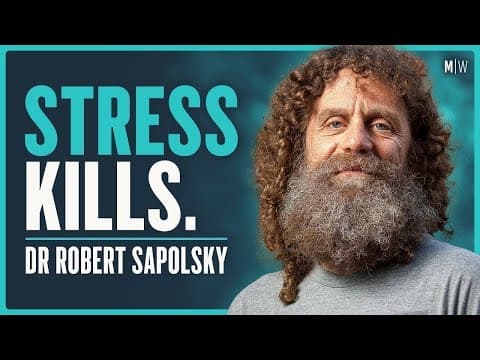
Dr. Robert Sapolsky discusses the profound effects of stress on the human body, particularly its detrimental impact on empathy and social behavior. He explains how stress hormones affect brain function, leading to reduced empathy and increased self-interest. The conversation also explores the implications of stress on mental health, societal behavior, and the concept of free will, emphasizing the need for understanding and addressing the root causes of stress in our lives.
Stress is a common experience for many, but its effects on the human body and mind are profound and often underestimated. Dr. Robert Sapolsky, a renowned neuroscientist, sheds light on how stress not only affects physical health but also significantly impacts our social interactions and emotional well-being.
Dr. Sapolsky emphasizes that while stress can lead to various physical health issues, its most meaningful impact is on the brain. Stress reduces empathy, tolerance, and the ability to understand others' perspectives. This narrowing of concern leads to a society where individuals are less kind and more self-centered.
Research indicates that the anterior cingulate cortex (ACC) plays a crucial role in empathy. This brain region activates when we perceive someone else's pain. However, stress disrupts its functioning, leading to a diminished capacity for empathy. For instance, studies show that stressed individuals are more likely to cheat in economic games and exhibit a narrowed moral compass, focusing only on those who resemble them.
Stress hormones can significantly alter brain function. Experiments have shown that blocking the effects of stress hormones can help maintain empathy levels in stressed individuals. This suggests that our capacity for empathy is not just a personality trait but is also influenced by our physiological state.
Dr. Sapolsky discusses the concept of agency in the context of stress. He argues that the notion of free will is largely a myth. Our behaviors and reactions are shaped by a complex interplay of biology and environment, much of which is beyond our control. This perspective challenges the traditional views of personal responsibility and moral judgment.
While short-term stress can be beneficial, chronic stress is detrimental. The physiological responses to stress, which evolved to help us survive immediate threats, become harmful when activated continuously. This chronic stress can lead to severe health issues, including cardiovascular problems and mental health disorders.
Dr. Sapolsky highlights the significant influence of socioeconomic status on stress levels and health outcomes. Individuals from lower socioeconomic backgrounds often experience chronic stress due to instability and lack of control, which can lead to accelerated aging at the cellular level. This disparity in health outcomes underscores the importance of addressing social determinants of health.
Research indicates that a mother's socioeconomic status can affect fetal brain development. Elevated stress hormones during pregnancy can impair the development of critical brain regions, leading to long-term consequences for the child's emotional and cognitive functioning. By age five, a child's environment can already predict their stress hormone levels and brain development.
The interplay between genetics and environment is crucial in understanding stress and behavior. Genetic predispositions can influence how individuals respond to stress, but the environment plays a significant role in shaping these responses. For example, children raised in stressful environments may develop maladaptive coping mechanisms that persist into adulthood.
Dr. Sapolsky suggests that effective stress management requires a multifaceted approach. Key strategies include:
Understanding the complex relationship between stress, empathy, and our biological makeup is essential for improving our quality of life. By recognizing the impact of stress on our behavior and mental health, we can take proactive steps to foster empathy and compassion in ourselves and others. Dr. Sapolsky's insights challenge us to rethink our perceptions of free will and responsibility, urging a more humane approach to understanding human behavior and societal issues.