This blog post explores the current state of the economy, highlighting the disparity between rising asset prices and declining living standards, the impact of political changes, and the ongoing issue of inequality as a central economic challenge.
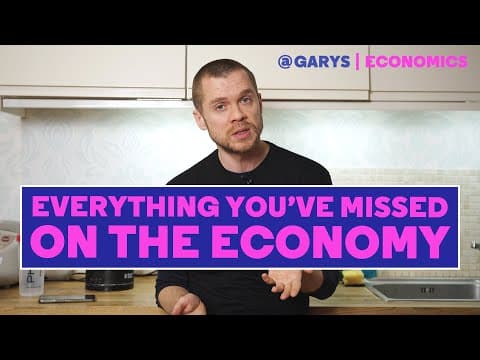
Welcome back to Gary's Economics. In this post, we will cover everything you might have missed regarding the economy, reflecting on the past year and discussing the current economic landscape.
Last year, I predicted that inflation would return to target levels, interest rates would begin to fall, and we would witness significant increases in stock and gold prices, alongside rising house prices as interest rates decreased. However, I also noted that living standards and poverty would continue to decline. Looking back, these predictions have largely come to fruition.
During my six-month absence, several key events occurred that warrant discussion:
These events have significant implications for the economy and financial markets moving forward.
Upon reviewing the financial markets, it is evident that most major stock markets are at or near all-time highs, as are gold prices and house prices. This situation feels eerily similar to last year, highlighting the aggressive increases in asset prices. However, this contrasts sharply with the reality that living standards for ordinary people have not recovered and continue to decline, painting a picture of a weak economy.
While the wealthy are experiencing unprecedented increases in their wealth, ordinary citizens are facing a permanent decrease in living standards. This disparity underscores a growing economic crisis characterized by inequality. The perception that the economy is weak stems from the struggles of the average person, while the rich thrive in this environment.
The political landscape has also shifted dramatically. In elections across various countries, the ruling parties have faced significant losses, reflecting public dissatisfaction with the economy. This dissatisfaction is rooted in the belief that the economy is permanently broken, leading to a demand for change. However, no political party has effectively addressed this need for change, resulting in a collapse of centrist politics.
The right-wing political narrative has begun to focus on migration and foreign influence as scapegoats for economic woes. This rhetoric, seen in the campaigns of figures like Trump and Farage, is gaining traction. Historically, such messages have proven popular, but they often fail to address the underlying issue of wealth inequality.
On the left, Labour's recent election victory was achieved with a minimal economic message, primarily benefiting from the Conservative Party's unpopularity. However, Labour's economic plan lacks clarity and is perceived as a weak attempt to maintain the status quo. Their modest budget, which included slight tax increases and spending, was met with dissatisfaction from the public and financial markets alike.
The current economic environment is dominated by the consequences of increased inequality, which has been exacerbated by the COVID-19 pandemic. As wealth becomes increasingly concentrated among the rich, ordinary people face higher costs of living and declining standards of living. This trend is likely to continue unless significant changes are made.
While we may not see the rapid declines in living standards experienced during the pandemic, the high levels of inequality will persist. Ordinary people will continue to pay more in interest and rents to the wealthy, leading to a steeper gradient of economic decline. Asset prices may continue to rise, particularly in the housing market, as interest rates begin to fall.
Governments are currently struggling to address the root causes of economic issues. Both left and right political factions are hesitant to acknowledge that inequality is a fundamental problem. As a result, they continue to propose ineffective solutions that fail to address the underlying issues.
The current economic picture is grim, with rising inequality and stagnant living standards for the majority. The only hope for reversing this trend lies in acknowledging inequality as the central issue and advocating for policies that tax the rich more heavily while alleviating the burden on ordinary citizens. Without this shift in focus, we can expect continued economic decline and a further entrenchment of wealth among the elite.
As we move forward, it is crucial to keep the conversation about inequality at the forefront of political discourse. Only then can we hope to create a more equitable economic future for all.