This article explores the subtle yet impactful differences between various American butter brands, focusing on fat content, ingredients, and production methods. It highlights why some butters melt and brown differently, the significance of natural versus added coloring, and the benefits of cultured cream and higher fat percentages. The piece also distinguishes real butter from butter substitutes and offers insights into choosing butter based on cooking needs and flavor preferences.
Since the 1800s, the dairy industry has used anado, a plant-based dye, to turn pale butter from grain-fed cows into a golden yellow color. This dye adds no beta carotene or extra vitamin A—just color. However, the real story about butter quality isn't about color but about a small yet significant difference: 2% fat content.
The gap between American butter and European butter is just 2% fat, but this small difference changes how butter melts, browns when cooked, and whether pastries like croissants come out flaky or flat. This 2% fat difference influences the cooking and eating experience significantly.
The cheapest butter in America often carries the USDA Grade AA certification, the same as premium brands costing three times more. However, this certification only measures freshness, texture, and salt distribution—not flavor, fat quality, or milk origin. Therefore, two Grade AA butters can offer completely different experiences.
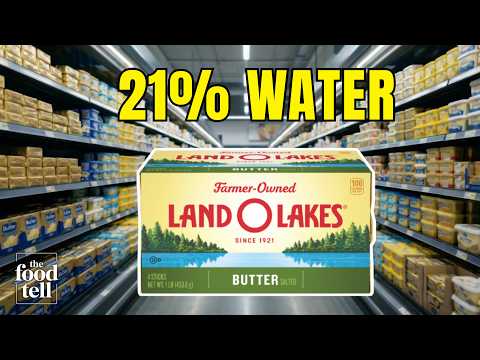
For example, Walmart's Great Value butter operates at the American legal minimum of 80% butter fat. This means 20% of every stick is water and milk solids, with flavor dominated by salt and bland cream underneath. When making brown butter, it takes longer to clarify due to the higher water content. Calculating the fat content from the nutrition label confirms this: 11 grams of fat per 14 grams per tablespoon equates to roughly 79% fat, meaning over 21% is not butter.
Great Value butter is the cheapest and always available, suitable for dishes where butter isn't the star.
Millions of American families grew up spreading Country Crock on toast, believing it was butter. However, Country Crock is not butter; it is a blend of vegetable oil, water, salt, emulsifiers, preservatives, natural flavors, and coloring, with no dairy cream. The packaging is designed to look like butter, but the product inside is entirely different.
Country Crock spreads easily from the fridge and works for people who cannot eat dairy. When spread on warm bread alongside real butter, the difference is obvious: real butter melts and soaks into the crumb, while Country Crock sits on top like an oil coating.
Real butter must come from a cow and real cream—no exceptions. When reading ingredient lists, if any kind of oil is listed instead of cream or butter, it is not real butter. Many brands add natural flavors or coloring, which suggests the cream inside isn't good enough to stand on its own.
Founded in New York City in 1882 and now owned by Lactalis, Breakstone's adds natural flavors to their butter. The ingredient list includes these flavors, which raises questions about the cream quality. The butter is pale, almost white, because the cows are grain-fed, not grass-fed. The golden color often seen in butter comes from anado seeds, a natural dye, not from pasture.
Breakstone's butter is 80% butter fat sweet cream with no culturing. It is whipped for convenience and widely available, functional for basic cooking.
A farmer-owned cooperative from Vermont, Cabot emphasizes its farmer-owned status but this is a supply chain claim, not a quality claim. Cabot butter sits around 80% fat, just above the legal minimum. Salt is the dominant flavor, masking the cream's subtlety. It works well for cooking that requires salt but can overwhelm when spread on bread.
Founded in 1921 by 320 cooperative creameries, Land O'Lakes is an iconic American butter brand. It is clean, reliable, and consistent with 80% fat sweet cream and no culturing. However, Land O'Lakes is connected to Forage Genetics, a company involved in genetically modified alfalfa, which may concern some consumers.
All these brands share the same formula: 80% fat, sweet cream, no culturing, but vary widely in price and story. The question arises: if a different product with just 2% more fat and a fermentation step exists, why does the industry stop at the minimum?
A farmer-owned co-op since 1911 on the West Coast, Challenge butter has the shortest ingredient list found: sweet cream and salt. It still has 80% fat but no additives, allowing the natural flavor of the cream to shine. The unsalted version has a subtle grassy note and a gentle natural sweetness.
A farmer-owned co-op from Oregon, famous for cheddar cheese, Tillamook focuses on water content control. It has noticeably lower water content than standard 80% butters, resulting in less steam during baking, which improves flakiness and crispiness. It clarifies faster and melts into bread crumbs rather than sitting on top.
Tillamook is still 80% fat sweet cream without culturing, and its availability is limited outside the West Coast.
An American cooperative producing butter with 82% fat, matching the European standard. Slow churned in small batches, Plugra is favored by professional chefs for consistent performance. It melts faster, browns deeper, and produces flakier croissants due to less water content.
Plugra is rich and clean but lacks the tangy depth of cultured butter. It can be hard to find in some stores.
A California creamery using Old Country Danish methods produces butter with 85% fat, the highest fat content found in mainstream American supermarkets. This butter has roughly 30% less water than standard butter, resulting in a richer mouthfeel and darker, nuttier brown butter.
It is not cultured and mostly available on the West Coast, making it less accessible for many consumers.
Founded in Ireland in 1962, Kerrygold is supplied by 14,000 small family farms and sells 11 million packages weekly worldwide. It has 82% butter fat, cultured cream, and is grass-fed. The golden color is natural from beta carotene, not dye.
Kerrygold's cultured cream adds a gentle tangy note, similar to yogurt, which lingers on the palate. It offers more fat-soluble vitamins due to grass-fed cream and less water content than many American butters.
Some butters use cultured cream, meaning the cream is fermented before churning. This process adds complexity and a tangy finish to the butter, unlike sweet cream butter, which finishes flat and disappears quickly.
After researching, the author now keeps two butters in the fridge: a standard 80% fat butter for cooking where butter blends into the dish, and a higher fat or cultured butter for when butter is the star ingredient.
Different consumers have different priorities: families feeding many people weekly, weekend bakers, or those watching sodium intake. Each reason is valid and influences butter choice.
The gap between assumptions and reality about butter quality is wider than expected. Paying attention to labels, fat content, ingredients, and production methods can change your butter experience dramatically.
Next time you pick up a stick of butter, consider doing the fat math on the label and examining the ingredient list. Understanding these details helps you choose butter that best suits your cooking and flavor preferences.
Remember, the color of butter has often been a trick, but the fat content and cream quality are what truly matter.