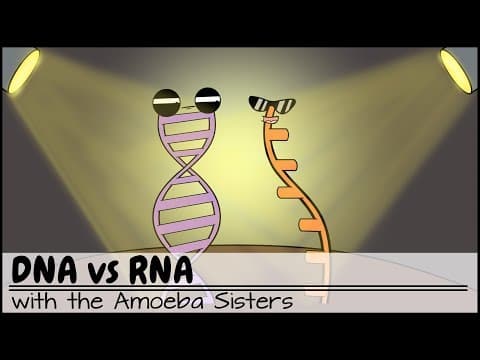
This blog post explores the fundamental differences and similarities between DNA and RNA, highlighting their structures, functions, and roles in protein synthesis, while also addressing common misconceptions about their importance in biological processes.
DNA and RNA are two essential biomolecules that play crucial roles in the biology of all living organisms. While DNA often receives the spotlight for its iconic double helix structure and its role in storing genetic information, RNA is equally important in the process of protein synthesis. This blog post will delve into the key differences and similarities between DNA and RNA, their structures, functions, and the vital roles they play in cellular processes.
Both DNA (deoxyribonucleic acid) and RNA (ribonucleic acid) are classified as nucleic acids, which are a type of biomolecule. They are composed of monomers known as nucleotides. Each nucleotide consists of three components: a phosphate group, a sugar, and a nitrogenous base.
In eukaryotic cells, DNA is primarily located in the nucleus, while RNA can be found both inside and outside the nucleus. Prokaryotic cells, which lack a nucleus, contain both DNA and RNA in the cytoplasm.
One of the most significant differences between DNA and RNA is their structure. DNA is generally double-stranded, forming a twisted ladder-like structure known as a double helix. In contrast, RNA is typically single-stranded.
The sugar in DNA is deoxyribose, while RNA contains ribose. This distinction is reflected in their names: DNA stands for deoxyribonucleic acid, and RNA stands for ribonucleic acid.
The nitrogenous bases in DNA include adenine (A), thymine (T), guanine (G), and cytosine (C). A common mnemonic to remember the base pairing in DNA is "apples in the tree" (A pairs with T) and "car in the garage" (C pairs with G). In RNA, the bases are adenine (A), uracil (U), guanine (G), and cytosine (C). Here, uracil replaces thymine, leading to a modified mnemonic: "apples under" (A pairs with U).
While DNA codes for genetic traits, it cannot perform this function alone. RNA plays a critical role in translating the genetic information stored in DNA into proteins, which are essential for various cellular functions.
There are three main types of RNA involved in protein synthesis:
Messenger RNA (mRNA): This type of RNA carries the genetic message from DNA to the ribosomes, where proteins are synthesized. In eukaryotic cells, mRNA can exit the nucleus to deliver its message.
Ribosomal RNA (rRNA): rRNA is a major component of ribosomes, the cellular machinery that assembles proteins based on the instructions provided by mRNA.
Transfer RNA (tRNA): tRNA is responsible for transferring amino acids to the ribosome, matching them with the correct mRNA codon. Codon charts are used to determine which amino acid corresponds to each mRNA codon, facilitating the assembly of polypeptide chains that form proteins.
To reinforce your understanding of DNA and RNA, consider the following questions:
If I have 8 DNA nucleotides, how many DNA bases do I have? How many base pairs?
If one strand of DNA has the bases A, T, T, G, A, C, what are the complementary bases on the other strand?
In transcription, if the original DNA sequence is A, T, T, G, A, C, what would the complementary RNA bases be?
In summary, while DNA is often celebrated for its role in storing genetic information, RNA is equally vital for translating that information into functional proteins. Understanding the differences and interactions between these two nucleic acids is essential for grasping the complexities of molecular biology. As we continue to explore the fascinating world of genetics, it is crucial to appreciate the contributions of both DNA and RNA in the life of every organism. Stay curious and keep learning!