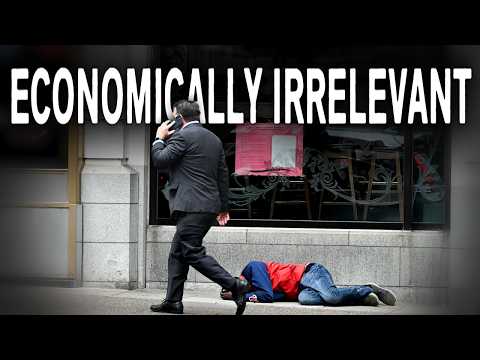
The recent GDP growth in the US masks deeper economic issues, including rising inequality and the diminishing role of average consumers. With more private equity firms than McDonald's, the economy increasingly caters to the wealthy, leaving many feeling economically irrelevant. This post explores the implications of these trends on personal consumption, labor, and investment, revealing a troubling shift in economic dynamics.
Late last week, the US economy surprised many economists with a report indicating a growth rate of 3.8% in the second quarter. This figure seemed to alleviate concerns about a softening job market, trade wars, and rising costs of living. However, beneath this seemingly positive headline lies a complex narrative that challenges our understanding of economic health and individual relevance in the current landscape.
While a 3.8% growth rate sounds promising, it is essential to scrutinize the underlying data. Gross Domestic Product (GDP) is calculated by summing household consumption, investment, government spending, and exports, then subtracting imports. The recent report revealed that imports had dropped significantly, which artificially inflated the GDP figure. In reality, if we account for the fluctuations in import volumes, the economy would have contracted by 1.2% at an annualized rate.
Consumer spending constitutes a staggering 68% of the American economy, a figure that is significantly higher than in most other advanced economies. This reliance on consumer spending creates a false sense of security. Notably, 50% of all consumer spending is now attributed to the top 10% of households, while the bottom 60% account for less than 20%. This disparity raises concerns about the sustainability of economic growth, as a significant portion of the population struggles to make ends meet.
The rise of private equity firms—now outnumbering McDonald's locations—illustrates a shift in economic focus. Investment opportunities are increasingly directed towards a small number of ultra-high-net-worth individuals and institutions, rather than the average consumer. This trend suggests that the economy is catering more to the wealthy, leaving the average worker feeling economically irrelevant.
Over the past 40 years, personal productivity has doubled, yet median wages have only increased by 20% when adjusted for inflation. This discrepancy highlights a troubling reality: while people are producing more, they are not reaping the benefits. Essential items such as housing, education, and healthcare have become increasingly unaffordable, while non-essential goods have become more accessible.
Modern technology has transformed the job market, making many roles easier to perform but also easier to replace. Jobs that once required specialized skills are now often filled by individuals with minimal training. This commodification of labor raises questions about job security and the value of work in today's economy.
While it may seem that investing offers a pathway to economic relevance, the reality is stark. The top 10% of households own over 93% of corporate equities, while the majority of Americans struggle with high-interest consumer debt. This situation creates a divide where only a small fraction of the population can effectively participate in wealth-building activities.
The growing divide between the wealthy and the rest of the population poses significant risks to social cohesion and economic stability. A scenario where unemployment rises but the economy continues to grow is increasingly plausible, as the majority of economic activity is driven by a small elite. This disconnect complicates policy responses aimed at supporting ordinary workers without inadvertently benefiting wealthy asset owners.
The term "platonomy"—a combination of plutocracy and economy—describes a system where economic growth is driven by and primarily benefits a wealthy few. This concept was highlighted in a 2005 report by Citigroup, which warned that the economy would increasingly cater to the rich, leaving the majority behind. The implications of this trend are profound, as it suggests a future where the average consumer is no longer a significant player in the economy.
In conclusion, the recent economic data reveals a troubling reality: the average individual may not matter as much to the economy as they once did. With rising inequality, a focus on serving the wealthy, and a changing job landscape, many people find themselves feeling economically irrelevant. Understanding these dynamics is crucial for navigating the current economic landscape and advocating for a more inclusive future. As we move forward, it is essential to recognize the importance of equitable economic participation and the need for policies that address these disparities.