Understanding the Electron Transport Chain: The Final Step of Cellular Respiration
The electron transport chain, located in the mitochondria, is the final stage of cellular respiration where electrons from glucose breakdown are used to produce ATP and water, highlighting the crucial role of electron carriers and oxygen in energy production.
The electron transport chain (ETC) is a vital component of cellular respiration, marking the grand finale of this complex process. It occurs within the mitochondria of cells, which are often referred to as the powerhouses of the cell due to their role in energy production.
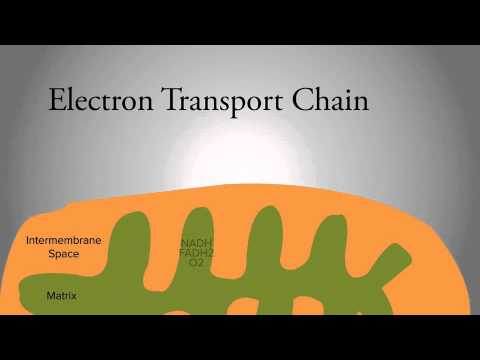
Structure of Mitochondria
Mitochondria consist of two main areas:
- Matrix: The inner compartment where various metabolic reactions occur.
- Inter-membrane Space: The area between the inner and outer membranes of the mitochondria.
These two regions are separated by a membrane that plays a crucial role in the functioning of the electron transport chain.
The Role of the Electron Transport Chain in Cellular Respiration
The basic idea behind the electron transport chain is to utilize electrons produced from the breakdown of glucose, which is derived from the food we consume. These electrons are stored in molecules known as electron acceptors, specifically NADH and FADH2. The primary purpose of the ETC is to use these electrons, along with oxygen, to produce adenosine triphosphate (ATP), the energy currency of our bodies, and water.
Mechanism of the Electron Transport Chain
The process of the electron transport chain involves several key steps:
- Electron Donation: Carrier proteins embedded in the mitochondrial membrane extract electrons from the electron carriers NADH and FADH2.
- Proton Movement: As electrons traverse the electron transport chain, protons (H+ ions) are actively transported across the mitochondrial membrane into the inter-membrane space. This movement creates a proton gradient, leading to a higher concentration of protons in the inter-membrane space compared to the matrix.
- Final Electron Acceptance: At the end of the electron transport chain, the electrons are donated to oxygen molecules. This reaction is crucial as it leads to the formation of water, a byproduct of cellular respiration.
- ATP Production: With a high concentration of protons accumulated in the inter-membrane space, protons re-enter the mitochondrial matrix through specialized channel proteins. This movement of protons drives the synthesis of ATP from adenosine diphosphate (ADP) through a process known as chemiosmosis.
Conclusion
The electron transport chain is an essential process in cellular respiration, enabling cells to convert the energy stored in glucose into a usable form, ATP. By understanding the intricate workings of the ETC, we gain insight into how our bodies harness energy from the food we eat, emphasizing the importance of both electron carriers and oxygen in this life-sustaining process.