This blog post explores the concept of fractals in understanding consciousness and reality, emphasizing the interplay between reductionism and holism. It discusses how complex systems mirror each other across scales, revealing deeper patterns in nature and consciousness. The insights from physicist David Bohm and examples from biology illustrate how individual actions resonate within larger systems, suggesting that awareness and attention shape our experiences and interactions with the universe.
One of the most illuminating voices in understanding hidden patterns of the universe comes from David Bohm, a physicist who refused to see the universe as merely a machine. He suggested that beneath the world we perceive lies an implicate order, a deeper level of reality where everything unfolds into everything else, giving rise to the explicit order we perceive as consciousness.
To understand this unfolding, we must first explore the concept of reductionism. Reductionism is the idea that a system can be understood by examining its individual parts. This approach implies that one may need to examine something at multiple levels, from the whole to its parts, and then to the parts of those parts. For instance, biologists study living organisms at various levels, from the entire body to organ systems, down to cellular structures. Beyond the cellular level, we encounter chemical interactions and agents such as enzymes and amino acids, which are the building blocks for proteins.
As we delve deeper, we reach the atomic level, where physicists shatter atoms into their constituent parts: protons, neutrons, and quarks. Ironically, at this level of understanding, scientists often rely on mathematical techniques that bear little resemblance to the reality we started with.
If we were to describe how the universe works using a reductionist approach, we might catalog all the different types of objects that exist, starting from galaxy clusters down to subatomic particles. However, this method often overlooks the importance of context. For example, describing a duck in detail only provides half the story. To truly appreciate what a duck is, we must consider its environment—how it interacts with air and water, what it eats, and its social structures.
This brings us to the concept of emergence, where the whole of a system is greater than the sum of its parts. This is a fair definition of holism, which stands in contrast to reductionism. The interactions at one level of understanding can be very different from those at another level. For instance, cells are not organs, organs are not animals, and animals are not species. Yet, surprisingly, the interactions on one level often mirror those on another.
Consider the example of an ant. An individual ant's behavior is relatively simple, but when we examine the ant colony as a whole, the behavior becomes much more complex. The physical structures that ants build often contain thousands of passageways, appearing maze-like to human eyes but easily navigated by the ants themselves. An ant colony is more than just a collection of ants; it is a complex system that exemplifies emergent behavior.
The question arises: how do collectives such as ant colonies, human brains, and economic markets self-organize to create complex behaviors that surpass those of individual components? The answer lies in a simple fact: nature is frugal. Among all the possible rules governing interactions among agents, scientists find that nature often employs the simplest ones. Moreover, these same rules are frequently observed in vastly different contexts.
Engaging with platforms like Brilliant can enhance our understanding of these patterns. For instance, their visual algebra course encourages users to explore how nature builds through patterns, symmetry, and harmony. This exploration reveals how the cosmos mirrors itself at every scale.
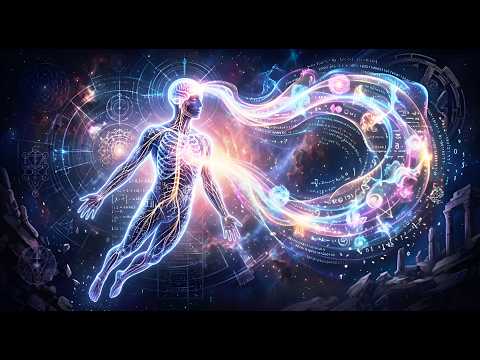
No single neuron contains consciousness; rather, it is the network of neurons that creates the appearance of mind. Reductionism illustrates what mystics have suggested for centuries: the essence of things cannot be captured in fragments. Complex systems behave like mirrors, where the branching of veins resembles the branching of rivers and galaxies. The firing of a neuron resonates with societal exchanges of ideas, and the dance of planets echoes the rhythms of breath.
The principle of "as above, so below" reveals that complexity thrives on mirroring. Feedback loops in ecosystems resemble those in the mind, and fractals repeat across scales. The smallest unit carries the shape of the vast, demonstrating that every action, thought, or choice participates in a larger harmony. When we act at our scale, the universe responds at its scale.
To see this interplay is to move beyond reductionism into reflection. We realize we are both detail and totality—an atom carrying the signature of the cosmos. Complex systems reveal patterns that span scales, where every unit participates in the intelligence of the whole. For example, coral polyps build reefs that sustain countless forms of life, while ants cooperate to create colonies that solve problems no single ant could tackle.
Consciousness itself participates in this reflection, sensing patterns and amplifying interactions. Individual actions, thoughts, and choices contribute to a vast choreography, reflecting and shaping realities both immediate and expansive. Attention flows through the system, shaping outcomes as neurons shape thought or bees shape the hive.
The hermetic axiom "as above, so below" assumes correspondence between layers of reality. The whole reveals itself in each of its fragments. An isolated neuron does not know imagination, but networks of billions can dream myths and philosophies. Thus, while reductionism clarifies the bricks, the principle of correspondence reveals the cathedral.
This integration suggests that to know reality is to hold both lenses at once: the precise scalpel of reduction and the infinite mirror of correspondence. In this view, thought serves communion. The mind becomes a vessel, receiving impressions with reverence rather than greed. Logic transforms into art, and perception becomes meditation.
Consider the early experiments of Nikolai Bernstein, who filmed dancers moving while wearing black leotards with white dots painted on their joints. His analysis revealed that the patterns of movement could predict the dancers' next motions before they happened. The body, in its physicality, whispers the poetry of thought long before conscious attention tries to control it.
When we take this personally, it changes everything. Life stops feeling like a puzzle to solve and starts feeling like a conversation we are part of. We begin to notice small things—a glance from a stranger, a phrase in a book, the timing of events. These details carry weight, as if the world is speaking directly to us.
Your thoughts are no longer factories pumping out conclusions; they become vessels catching patterns and intuitions. Every choice, habit, and moment of attention becomes part of a larger rhythm. You realize you are not separate from the currents of life; your awareness participates in shaping them.
Moments that once felt random begin to feel meaningful, aligned with something deeper that you sense but cannot always name. Seeking truth becomes personal, not about acquiring facts but about learning to read the subtle language of your own experience. You start to recognize patterns and see the reflection of the universe in your daily life.
As you cultivate inner clarity, you draw outer clarity. Being present and receptive changes what appears before you. Every day becomes a laboratory, every thought a tool, and every encounter a mirror. Truth, in this light, is intimate and woven into the texture of your life, waiting for your attention.
When you feel it personally, life starts speaking in patterns you can touch. The small coincidences, fleeting moments of insight, and even frustrations become messengers. You learn that attention is creative; what you focus on expands. Searching for truth becomes deeply personal, as you learn to feel the currents and hear the subtle cues of existence. The act of living transforms, revealing that reality is alive, intelligent, and waiting for your participation.