Fossils are crucial for understanding ancient life, yet most organisms never fossilize due to various biases. This blog explores the fossilization process, preservation bias, and how researchers are piecing together the incomplete fossil record.
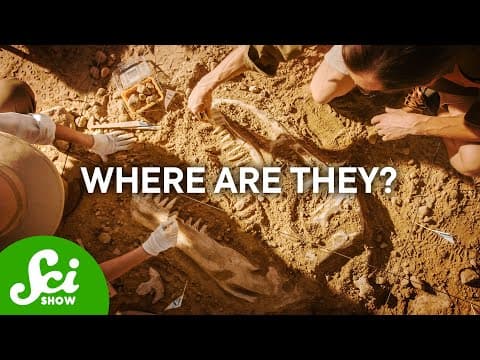
When visiting a natural history museum, the sight of fossils often evokes awe and wonder. However, the reality is that most fossils are missing, and many organisms that lived in the past never became fossils at all. This presents a significant challenge for researchers aiming to uncover the secrets of ancient life. In this blog post, we will explore the fossilization process, the concept of preservation bias, and how scientists are working to fill in the gaps of the fossil record.
The journey to becoming a fossil begins with the death of an organism. While this part is straightforward, the transition from a dead organism to a fossil is complex. For fossilization to occur, the remains must be buried in sediment, such as sand or mud, which protects them from environmental factors like wind, rain, and scavengers.
Once buried, the organic remains undergo a gradual breakdown and react with surrounding minerals. Over time, the original materials are replaced or filled in with minerals, resulting in what we recognize as fossils, such as dinosaur bones or shark teeth. Essentially, these fossils are rocks composed of both original organic material and minerals from the sediment.
Fossilization can occur in various ways. For instance, insects can be preserved in amber, while leaves may become carbon films when compressed between rock layers. Despite these differences, the fundamental process remains the same: burial and preservation in rock.
The study of fossilization is known as taphonomy, which examines everything that happens from the moment an organism dies to when it is discovered as a fossil. Researchers recognize that not all organisms have equal chances of fossilization, a phenomenon known as preservation bias.
Preservation bias significantly influences our understanding of ancient ecosystems. For example, trilobites, with their hard exoskeletons, are well-represented in the fossil record. In contrast, many soft-bodied marine creatures likely decomposed before they could be buried and fossilized. Estimates suggest that 80 to 90 percent of ancient marine species never fossilized at all.
The likelihood of fossilization is influenced by the durability of an organism's body parts. Hard structures like bones and shells are more likely to survive the decomposition process compared to softer tissues like organs and feathers. Additionally, size plays a role; larger bones, such as those of a T. rex, are more likely to endure the fossilization process than smaller, delicate bones.
The environment also affects fossilization. Ideal conditions for fossil formation include consistent sediment buildup, low temperatures, darkness, and low oxygen levels. For instance, the bottom of a deep lake provides an excellent environment for fossilization, while harsh weather conditions hinder the process.
Despite understanding preservation bias, researchers face challenges in determining which organisms are missing from the fossil record. A 2025 study highlighted that the decomposition rate of marine animals varies based on their size and tissue composition, complicating predictions about fossilization potential.
Interestingly, scavengers can both hinder and help the fossilization process. While they may destroy remains, they can also facilitate preservation by opening up carcasses, allowing fluids and gases to escape, which can enhance the chances of fossilization. A notable example is the well-preserved Edmontosaurus fossil, which showed signs of scavenger activity that may have contributed to its exceptional preservation.
The La Brea Tar Pits in California provide a fascinating example of how specific conditions can skew fossil records. Many herbivores became trapped in the tar, attracting carnivores that also became stuck. This resulted in an unusual ratio of carnivore to herbivore fossils, which does not accurately reflect the ecosystem's dynamics.
Human error also contributes to the incomplete fossil record. Studies have shown a sex bias in museum collections, with male specimens being more common than females. This bias may stem from the larger size and more striking features of males, making them more appealing to collectors. Additionally, male behaviors may predispose them to becoming fossilized more frequently.
Despite the challenges posed by preservation bias and human error, researchers are employing various strategies to fill in the gaps of the fossil record. Different types of fossils can complement each other, providing a more comprehensive view of ancient life. For example, fossil footprints can offer insights into species that lack skeletal remains.
Scientists can also compare ancient environments to modern ecosystems to estimate missing species. By analyzing the ratios of species in contemporary ecosystems, researchers can make educated guesses about what might be absent from the fossil record.
Recent studies have attempted to estimate population sizes of extinct species based on relationships observed in living animals. For instance, a 2021 study estimated that around 20,000 adult T. rex existed at any given time, highlighting the vast difference between estimated populations and the number of fossils found.
To address the limitations of the fossil record, paleontologists continue to study the fossilization process itself. Each new discovery enhances our understanding of how organisms preserve in the geological record, bringing us closer to a more complete picture of the past.
While many ancient species may remain unknown, researchers are piecing together the history of life on Earth by understanding both the fossils that exist and those that do not. The quest to uncover the mysteries of our planet's history continues, driven by curiosity and scientific inquiry.