The Gini Coefficient is a key indicator used to measure income inequality within a country, ranging from 0 (perfect equality) to 1 (perfect inequality). It is calculated through a series of steps involving income data collection, graphing, and area analysis, but it does not account for wealth differences or the root causes of inequality.
The Gini Coefficient is an important indicator utilized by economists and policymakers to assess income inequality within a country. Named after the Italian statistician Corrado Gini, this coefficient quantifies how income is distributed among the population.
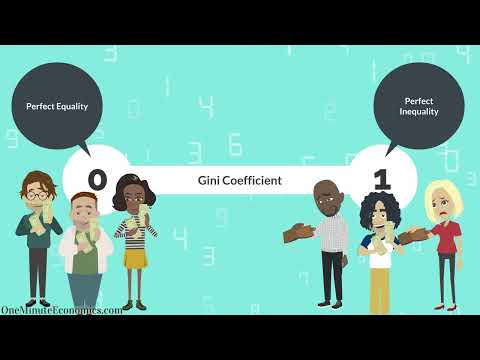
The Gini Coefficient is a numerical value that ranges from 0 to 1:
This measurement provides a clear snapshot of income distribution and highlights potential inequality issues within a society.
Calculating the Gini Coefficient involves several steps:
The first step is to collect income data from every individual in the population. This data is then sorted from the lowest to the highest income.
Next, a graph is created with:
This graph will illustrate the distribution of income across the population and will form a curve known as the Lorenz Curve, named after the U.S. economist Max Lorenz.
In this graph, three important lines are identified:
Imagine a right triangle formed by:
The Lorenz Curve divides this triangle into two areas. The Gini Coefficient is calculated as the ratio of the area between the line of perfect equality and the Lorenz Curve to the total area of the triangle. This ratio provides a numerical value that reflects the level of income inequality.
It is important to note that the Gini Coefficient measures income inequality, not wealth inequality. Additionally, it does not address the underlying causes of inequality, such as access to education or basic necessities. Therefore, while it is a useful tool for understanding income distribution, it should be considered alongside other indicators for a comprehensive view of economic inequality.
The Gini Coefficient serves as a vital tool for economists and policymakers to gauge income inequality within a country. By understanding its calculation and implications, we can better address the challenges posed by income disparity and work towards a more equitable society.