The integumentary system, commonly known as the skin, is one of the most accessible yet often underappreciated organ systems in the human body. It accounts for approximately 16 percent of total body weight and serves multiple vital functions.
Overview of the Integumentary System
The skin is constantly exposed to environmental factors such as sunlight and chemicals, and it is regularly worn away and attacked by microorganisms. The integumentary system is composed of two major components: the cutaneous membrane and accessory structures.
Functions of the Integumentary System
The primary functions of the integumentary system include:
- Protection: The skin protects underlying tissues and organs from impact, abrasion, fluid loss, and chemical attacks.
- Excretion: It helps eliminate salts, water, and organic wastes through various integumentary glands.
- Temperature Regulation: The skin maintains normal body temperature through insulation in the hypodermis and evaporative cooling via sweating.
- Synthesis of Vitamin D: The skin synthesizes vitamin D, which is crucial for calcium metabolism.
- Storage: It serves as a storage site for lipids and adipocytes in the dermis and hypodermis.
- Sensory Reception: The skin contains receptors that detect touch, pressure, pain, and temperature, relaying this information to the nervous system.
Structure of the Skin
The skin consists of two main layers: the epidermis and the dermis.
The Epidermis
The epidermis is the superficial layer of the skin, composed of keratinized stratified squamous epithelium. It contains several types of cells:
- Keratinocytes: These cells produce keratin, a fibrous protein that provides strength and waterproofing.
- Melanocytes: Located in the lower portion of the epidermis, these cells produce melanin, which protects DNA from ultraviolet radiation.
- Epidermal Dendritic Cells: These immune cells help activate the immune response.
Layers of the Epidermis
The epidermis is divided into strata:
- Stratum Corneum: The outermost layer, consisting of flat, dead keratin-filled cells.
- Stratum Lucidum: A clear layer found only in thick skin (palms and soles).
- Stratum Granulosum: A thin layer where cells begin to flatten and keratin production starts.
- Stratum Spinosum: Contains spiny cells that are metabolically active and provide strength.
- Stratum Basale: The deepest layer, where cell division occurs, and new keratinocytes are formed.
The journey from the basal layer to the surface takes about 25 to 45 days.
The Dermis
Beneath the epidermis lies the dermis, a strong and flexible layer of connective tissue, consisting of two layers:
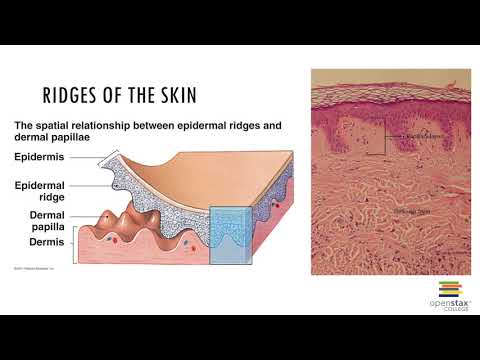
- Papillary Layer: Contains loose connective tissue and forms dermal papillae that project into the epidermis, contributing to fingerprints.
- Reticular Layer: Composed of dense irregular connective tissue, it contains collagen and elastic fibers, providing strength and elasticity.
The dermis also houses blood vessels, lymph vessels, and nerve endings, playing a crucial role in sensation and thermoregulation.
Skin Color and Pigmentation
Skin color is determined by three pigments:
- Melanin: Varies in hue and intensity, responsible for darker skin tones.
- Carotene: A yellow pigment related to vitamin A, found in the hypodermis and stratum corneum.
- Hemoglobin: The red pigment in blood vessels, contributing to skin color variations.
Accessory Structures of the Skin
The skin contains various accessory structures, including:
- Hair: Provides protection and sensory input.
- Nails: Formed from thickened epidermal cells, providing protection to the fingertips.
- Glands: Sebaceous (oil) and sweat glands play roles in lubrication and thermoregulation.
Skin Disorders and Cancer
Skin disorders can arise from various factors, including:
- Eczema: An allergic reaction causing dry, itchy patches.
- Acne: Often linked to hormonal changes, resulting in blocked hair follicles.
- Burns: Classified by severity (first to fourth degree) and can lead to dehydration and shock.
Skin Cancer
Skin cancer is categorized based on the affected layers and potential for metastasis. The three major types include:
- Basal Cell Carcinoma: The most common and least malignant form, easily treated.
- Squamous Cell Carcinoma: More aggressive but treatable if caught early.
- Melanoma: The most dangerous form, highly metastatic and resistant to treatment.
As we age, several changes occur in the skin:
- Decreased melanocyte activity leads to paler skin and increased sun sensitivity.
- Reduced sebaceous gland secretions result in drier skin.
- Thinning of the epidermis increases vulnerability to injury.
- Decreased metabolic activity affects vitamin D synthesis, leading to muscle weakness and brittle bones.
- Changes in blood supply and sweat gland function impair thermoregulation, increasing the risk of overheating.
Conclusion
The integumentary system is vital for protecting the body, regulating temperature, and sensing the environment. Understanding its structure, functions, and potential disorders is essential for maintaining skin health and addressing any issues that may arise. Regular skin checks and awareness of changes can help in early detection and treatment of skin conditions and cancers.